
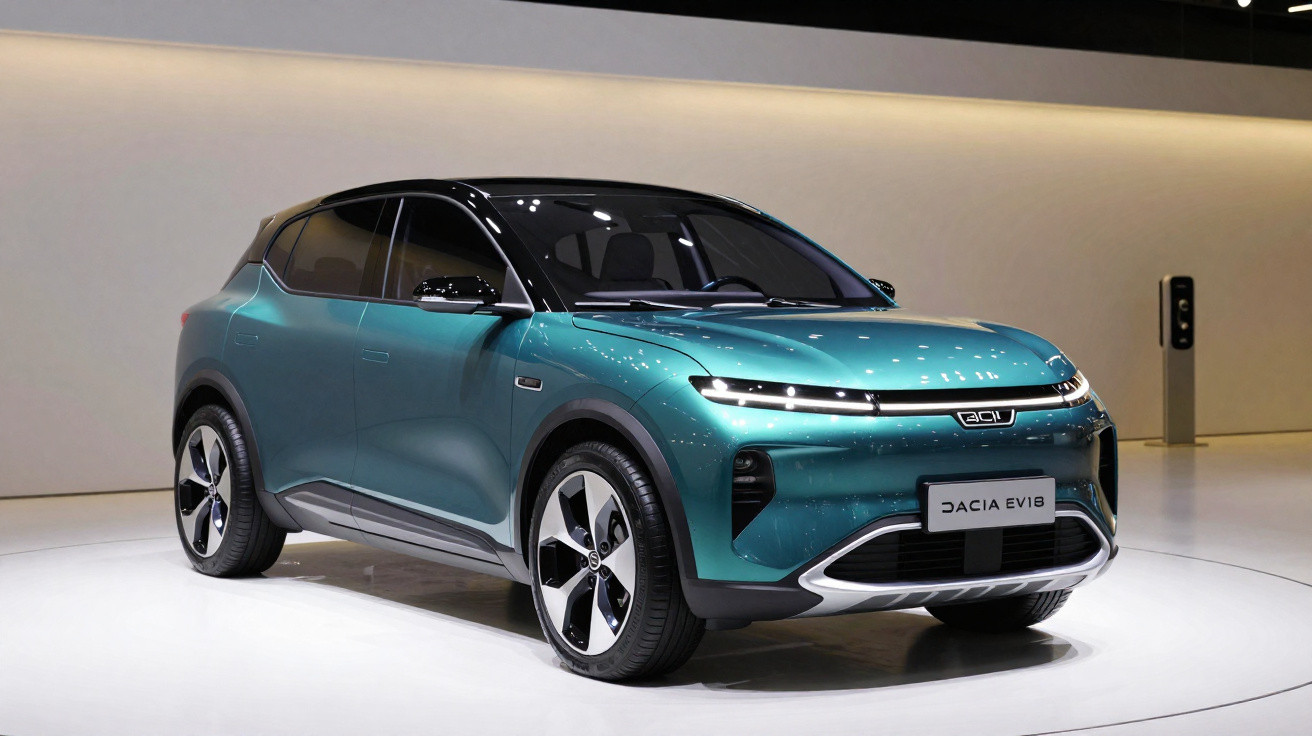
Romania’s budget champion is turning its strategy on its head - while still sticking to one core promise: affordable cars for everyone.
Dacia is using the Renault Group’s new future roadmap to push forward aggressively itself. The brand has signalled four fully electric models, and a new entry price point well below 18.000 euros is being discussed. That targets the exact weak spot for many rivals: straightforward electric mobility for tight budgets.
Dacia steps up: four EV models by 2030
Up to now, Dacia’s line-up has included just one pure electric car: the tiny Spring. It sold reasonably well and fit many household budgets, but its technology remained fairly basic - and because it is built in China, it has been excluded from certain incentive schemes.
Now the brand is drawing a clear line under that first phase. Under the Group plan “futuREady”, Dacia has officially confirmed that it intends to offer four battery-electric models by 2030. They are aimed at a wide spread of buyers in the small and compact classes, prioritising practical, uncomplicated vehicles rather than luxury add-ons.
"Dacia is aiming for roughly two thirds of its own sales to be electric by 2030 - at the brand’s usual sharp pricing."
That places the manufacturer on a broadly similar trajectory to many competitors, but with a different approach: less spectacle and more everyday usefulness, combined with a deliberate push towards lower prices.
New electric city car under 18.000 euros
The first piece of this offensive is already taking shape. Dacia is preparing a compact city-car variant that will be based technically on the next electric Twingo generation. It is expected to follow familiar Dacia traits: tough, straightforward, functional - and above all, inexpensive.
Dacia is also sending a strong message on pricing. The new model is intended to start below 18.000 euros, at least in its home market and across the most important European countries. Depending on local incentive programmes, it could become significantly cheaper in some places.
"In markets with an environmental bonus, the effective price for the new electric Dacia could drop below 15.000 euros."
Another key point: the car will be built in Europe. That improves the likelihood of qualifying for state support in several countries - unlike the Spring, which is imported from China and therefore can miss the cut under some rules.
What happens to Spring, Sandero and Duster
Spring stays - but will face tough competition from within
For the time being, the current EV, the Spring, will remain on sale even though it cannot access certain incentive models. It still represents the cheapest route into the brand, especially for drivers covering very short distances or looking for a second car.
However, the new Europe-built city EV could offer many buyers a more up-to-date package with better equipment - while still keeping prices appealing and improving eligibility for incentives.
An electric Sandero is all but certain
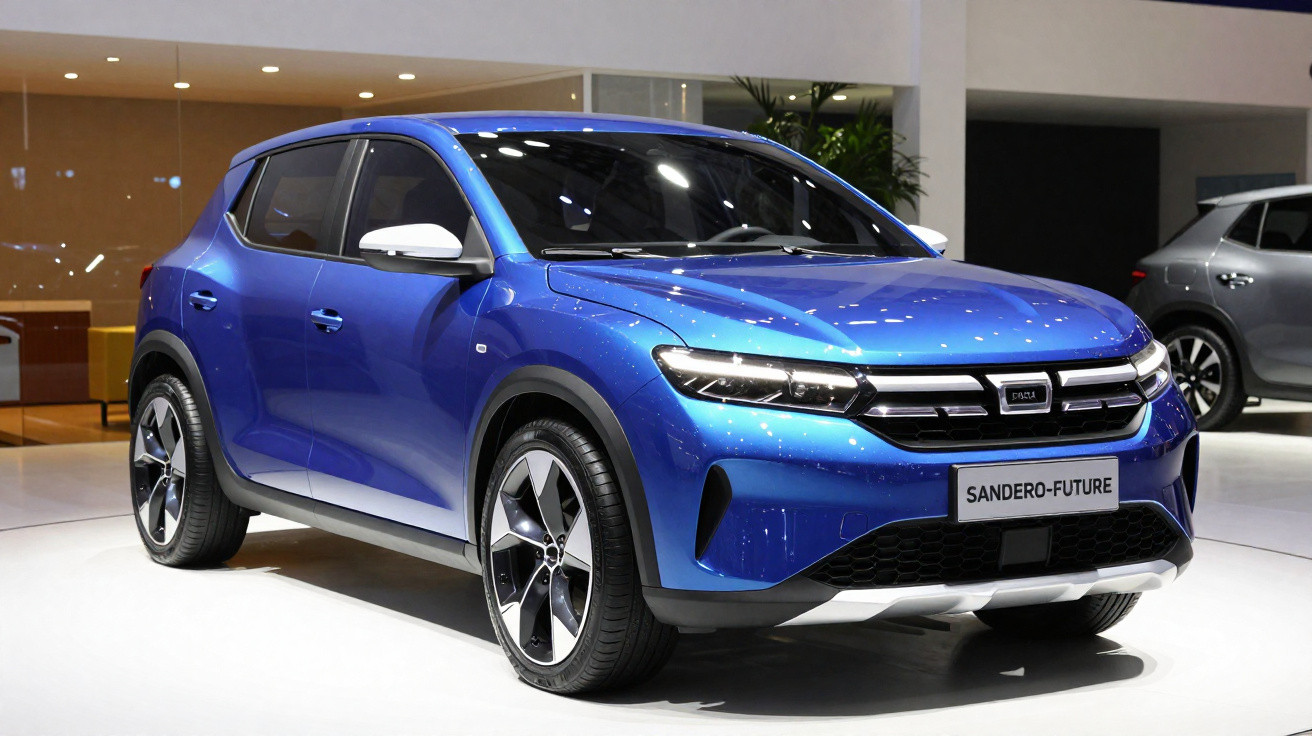
A fully electric version of the best-selling Sandero looks highly likely. While no official technical specifications have been published, insiders see a configuration with an LFP battery as the favourite. This battery technology is cheaper and durable, and is designed more around daily usability than maximum range.
- LFP batteries are considered particularly long-lasting
- lower raw-material demand than many other cell types
- typically less sensitive under high loads and frequent charging cycles
That makes the technology a strong fit for Dacia’s philosophy: no record-breaking figures, but solid engineering without unnecessary frills.
Duster sticks with petrol and hybrid for now
With the popular Duster SUV, Dacia is drawing a clear boundary initially: it will not appear immediately as a pure electric vehicle. Instead, it is likely to continue with petrol engines and electrified variants such as hybrid or mild-hybrid drivetrains.
From a strategic standpoint, that is logical. Larger, heavier vehicles require bigger batteries, which drives up costs. Dacia is focusing first on smaller EVs, where its low-cost approach is easier to deliver in technical terms.
Pricing strategy: electric mobility without a luxury premium
Dacia stresses that its fundamental direction remains unchanged. The brand still intends to be the cheapest - or among the cheapest - offerings in every segment it competes in. That also means avoiding unnecessary trim and keeping expensive high-tech extras firmly in check.
"At the centre is a simple promise: as much car as possible for as little money as possible - even with a battery instead of a fuel tank."
This is already reflected in several levers the brand can pull:
- production in Europe to reduce transport costs and improve the CO₂ footprint
- a lean model range to simplify development and manufacturing
- hard-wearing, relatively simple interiors instead of a premium look
- a focus on real-world ranges for everyday use rather than marketing headline figures
Where the planned models fit in
| Model / plan | Status | Targeted entry price | Build location | Key points |
|---|---|---|---|---|
| City EV based on new Twingo technology | announced | under 18.000 euros | Europe | strong chances of an environmental bonus |
| Spring | already on sale | depends on market | China | no access to certain incentive programmes |
| Sandero, fully electric | in planning | not yet disclosed | not yet disclosed | high likelihood of an LFP battery |
What does this mean for customers in German-speaking markets?
For buyers in Germany, Austria and Switzerland, Dacia’s electric push is likely to create new choices at the lower end of the market. In particular, people who have previously hesitated because list prices were too high or residual values felt uncertain may be drawn to an EV priced under 18.000 euros.
For commuters travelling 20 to 50 kilometres a day, smaller batteries are often entirely sufficient. Anyone able to charge at home or at work also benefits from lower electricity costs compared with petrol or diesel.
The interesting question will be how insurance costs, service intervals and resale values develop for the new models. Dacia has traditionally been strong with simple cars that are easy to repair - but with EV technology, the price of spare parts and workshop labour will matter even more.
What prospective buyers should watch now
Anyone considering a low-cost electric car over the next one to two years faces a familiar dilemma: wait for a new model or choose something already available.
A few factors can help with the decision:
- the incentive situation in your country: are bonuses about to change?
- your real space needs: is a small city car genuinely enough?
- everyday charging options: private wallbox or public charging?
- your planned ownership period: more like 3–4 years or much longer?
If you have flexibility and do not urgently need a vehicle, it can be worth tracking Dacia’s next announcements and waiting for the first test drives. For many buyers, the key will be whether the brand can protect its reputation as a price leader in the electric era.
One thing is clear: announcing four EVs and a new entry point under 18.000 euros brings real momentum to a segment that has long been dominated by expensive compact and mid-size electric cars. If Dacia delivers on its concept consistently, it will increase pressure on every manufacturer that has so far treated affordable e-mobility as a side issue.
Comments
No comments yet. Be the first to comment!
Leave a Comment