
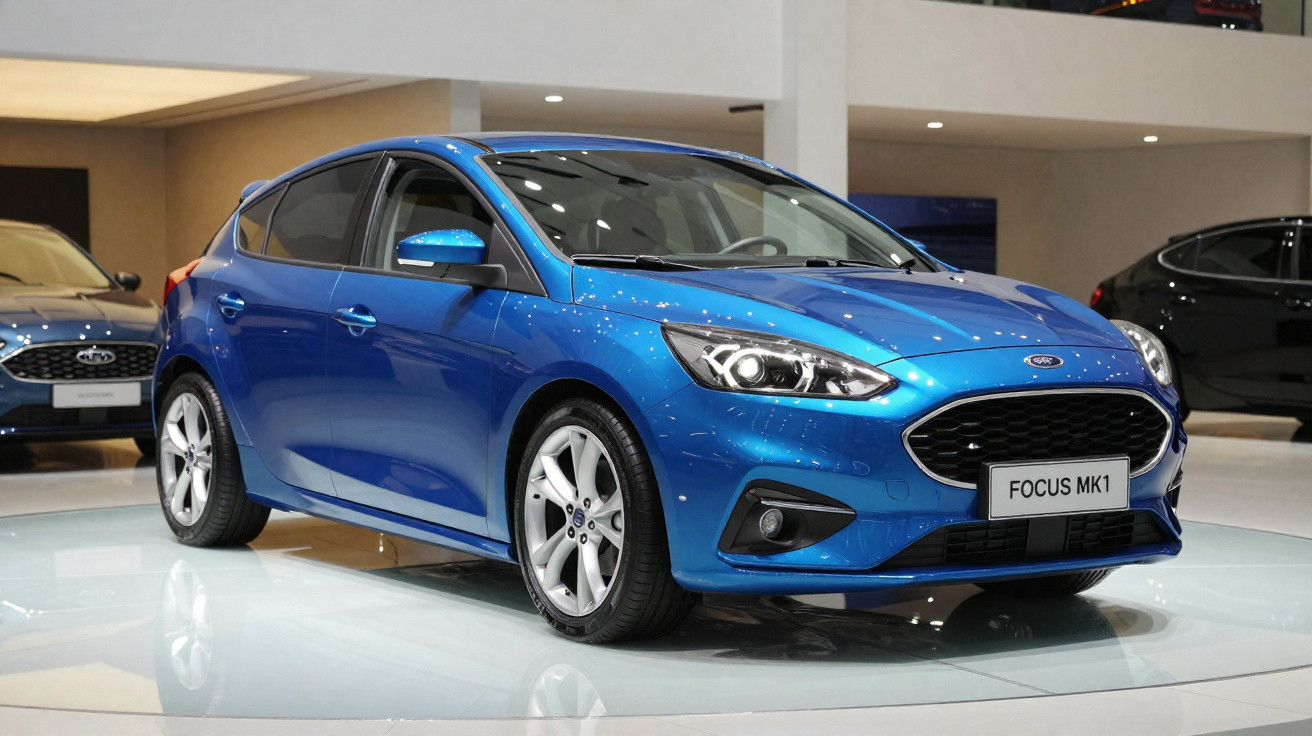
Many car enthusiasts wouldn’t expect this to be his top pick.
Anyone buying a used car today wants to avoid a gamble. Garage bills can spiral, while scandals involving engines and airbags have left drivers wary. An experienced mechanic from England has now singled out one specific model that has served him faithfully for years - and one he recommends to customers without hesitation.
Why choosing the right used car is so tricky
The used-car market is full of pitfalls. Superficially polished city cars can hide accident damage, while newer SUVs often come loaded with complex electronics that can become expensive as the vehicle ages. Private buyers, in particular, rarely have a realistic chance of spotting every risk in advance.
On top of that, several recall campaigns in recent years have shaken confidence. Faulty airbags, fragile turbocharged engines, timing-chain issues - if you are unlucky, you can find yourself back in a garage soon after purchase. That is why many motorists increasingly look to the day-to-day experience of professionals who spend their working lives under a lift.
"The opinion of a mechanic who has been repairing certain models for years - or, crucially, doesn’t have to repair them - is often worth more than any glossy advertising."
The workshop professional: what he actually drives
Paul Lucas, a seasoned mechanic in the United Kingdom, has spent years working on a huge range of vehicles. From German premium saloons to budget runabouts, he has seen just about everything on the ramp. Precisely because of that breadth of experience, his recommendation is surprisingly down-to-earth.
His long-term personal favourite does not wear a prestige badge. Instead, it carries a logo many people associate with affordable everyday motoring: Ford. In Germany, the brand is best known for the Fiesta and Focus. Among many mechanics, both are regarded as tough workhorses - as long as they have not been completely neglected.
Why an older Ford Focus, specifically?
Lucas is especially enthusiastic about a generation you will no longer find in a new-car showroom: the Ford Focus Mk1 from the early 2000s. He has driven a 1.6-litre petrol example himself for many years, so he knows the car not only from underneath on a lift, but also in real daily use.
"For him, a roughly 20-year-old Ford Focus Mk1 with a 1.6-litre engine is ‘hard to beat for reliability’ - provided the maintenance is right."
The mechanic bought his Focus around 15 years ago for just £500, which is roughly €600. Since then, the car has handled everyday life without any serious mechanical trouble. He attributes that mainly to two things: simple engineering and routine inspections.
Old instead of high-tech: why fewer electronics often means fewer headaches
Many modern cars are computers on wheels. Touchscreens, driver-assistance systems, electric seats, keyless entry - it all sounds convenient, but it also means more components, more control units and more potential failure points. As cars get older, those extras can quickly turn into a costly trap.
The Ford Focus Mk1 is very different. It comes from an era when family hatchbacks were still relatively straightforward in design. Mechanical solutions took priority, and the electronics remained manageable.
- Traditional ignition barrel with a standard key rather than a start button
- Simple on-board electrics with few control modules
- Robust, widely used 1.6-litre naturally aspirated petrol engine
- No complex infotainment system waiting to fail
This lack of “bells and whistles”, as Lucas calls it, is exactly what makes the car appealing to many mechanics. Faulty parking sensors or temperamental touchscreens never appear on the fault list - because the car simply does not have them.
What makes the Focus Mk1 attractive for buyers
Even two decades after production ended, the first-generation Ford Focus still appears regularly on used-car websites. Prices vary widely depending on condition, mileage and specification.
At the lower end, older examples often start at around €1,800. Better-kept cars - frequently with low kilometres or rare equipment - can reach €6,000 or more. Compared with many similarly aged hatchbacks, the Focus remains affordable.
If you are interested in this model, there are several practical benefits:
- Inexpensive spare parts: The Focus was built in huge numbers, and many components are available cheaply from aftermarket suppliers.
- Proven engine: The 1.6-litre petrol unit is considered durable, as long as oil changes and service intervals have been followed.
- Straightforward technology: Independent garages know the model well, and repairs rarely take long.
- Everyday usability: Despite its age, it offers enough space and a decent boot.
"If you don’t need a brand-new car, an ageing Ford Focus can be a solid companion - provided the specific example has been looked after."
What buyers should check on an older Focus
Even with praise from a professional, the rule still applies: no car is indestructible. Older vehicles, in particular, have typical weak points you should watch for when buying. A well-maintained Ford Focus can be a smart choice; a neglected one can become expensive quickly.
Typical inspection points
Before you buy, it is worth checking a few well-known problem areas. A brief inspection - with or without expert help - can prevent a lot of frustration later.
- Rust: Check wheel arches, sills, doors and the underside carefully.
- Service history: Look for stamps in the service book and invoices for oil changes and cambelt replacements.
- Suspension: Knocking or rattling on a test drive can indicate worn bushes or dampers.
- Brakes: Take rusty discs, uneven braking or scraping noises seriously.
- Interior: Heavy wear can suggest high mileage or poor care.
If you are not confident, have the car inspected by an independent garage before purchase. Many workshops offer fixed-price used-car inspections. For a few dozen euros, you can get a professional opinion on the vehicle’s mechanical condition.
Why mechanics often choose older cars
At first glance, it may seem odd that a workshop professional is not driving a current plug-in hybrid packed with every option. Look a bit closer, and it makes perfect sense. Mechanics know exactly which models become a constant source of trouble as they age - and which ones simply keep going.
Many technicians deliberately choose older, simpler cars because they:
- can fix faults quickly themselves
- do not want expensive specialist parts and software activations
- know their car’s weak points inside out
- value vehicles that last a long time with regular care
When a mechanic openly praises a model he has personally run for years, it is usually backed by substantial real-world experience. For everyday drivers, that is a useful pointer - particularly when a car like the Focus Mk1 has been proven on the road for decades.
Buying used today: pragmatism beats prestige
The recommendation from England highlights a trend that is also growing in Germany: many buyers are moving away from the idea that they must own the newest or most prestigious car possible. Instead, the key question is which vehicle is reliable, affordable and easy to maintain in daily life.
An older Ford Focus may not be a status symbol, but it is a clear-headed compromise: adequate space, decent safety equipment by the standards of its time, sturdy engineering and low-cost servicing. If you can live with that, motoring often becomes less stressful - and noticeably cheaper.
For people who commute every day, need a second car for the family, or simply want a dependable runabout, a pragmatic model like this can be the better option. An honest used car with solid fundamentals often does its job more reliably than an over-complicated high-tech model that nags you with warning messages every few months.
Ultimately, condition is what matters. But the workshop perspective shows that the most sensible answer is sometimes a discreet hatchback that has long since left the manufacturers’ spotlight - and, for that very reason, has had the chance to prove how durable it really is.
Comments
No comments yet. Be the first to comment!
Leave a Comment