
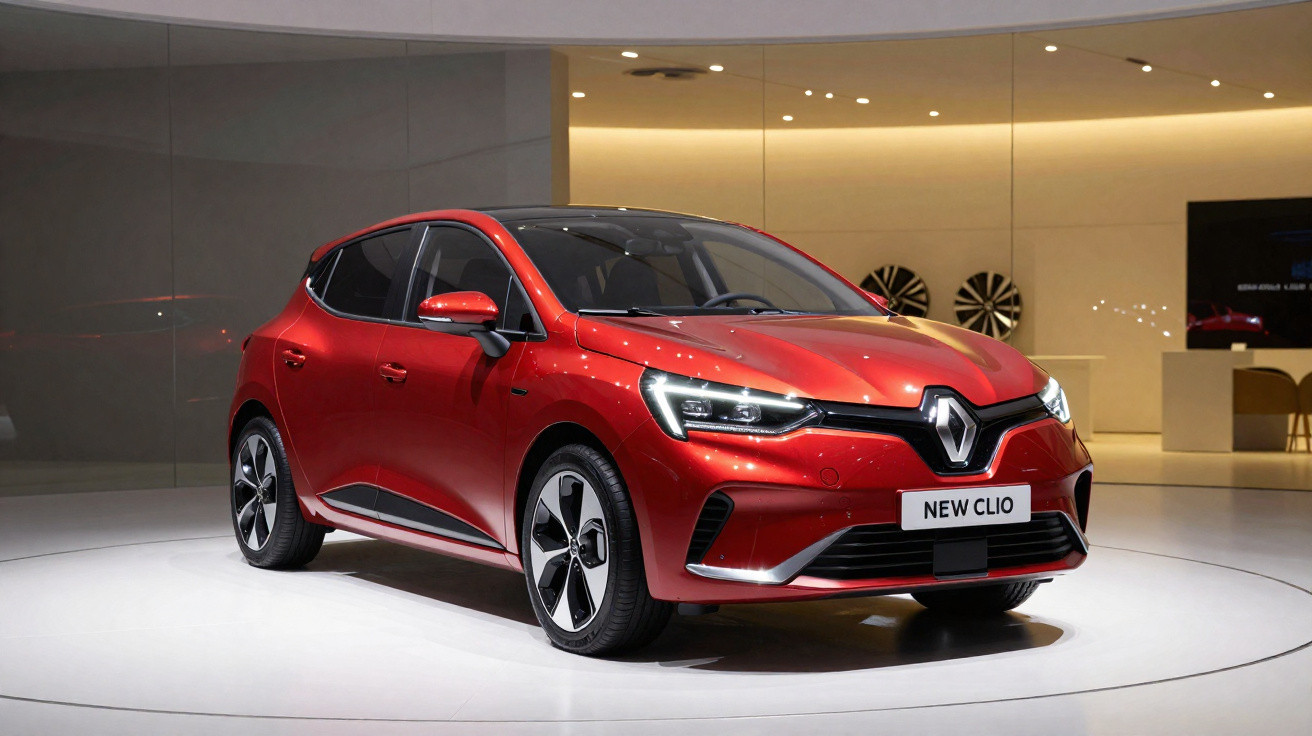
While the Clio has long been a familiar sight on roads across much of Europe, Renault is now taking a step that market leaders rarely risk: the car is being given a noticeably different face, a more sharply sculpted body and a far sportier edge - without abandoning its job as a practical everyday companion.
A deliberately reshaped identity
Even with strong sales, Renault is not sitting back. The brand has decided to give the Clio a fresh identity with a more emotional pull. The aim is for the car to be more than simply “sensible”, and instead make a small statement at first glance.
Designers talk about a more sculptural silhouette, and this is more than a marketing phrase. The body surfaces have been worked more visibly, with deeper recesses and more pronounced curves. Where earlier generations tended to look softly rounded, the latest Clio brings sharper edges and more tension into the shape.
"The new Clio generation puts far more emphasis on character visually: a stronger light signature, more contour, more sportiness in a supermini format."
This new identity is clearly aimed at two audiences: loyal customers who want their familiar car to feel more modern, and younger city drivers who want to stand out from the flood of SUVs and uniform design.
Sportier proportions and more muscular surfaces
A key part of the new direction is the side profile. The Clio gains a slightly sloping roofline that becomes flatter towards the rear. The result is a more dynamic silhouette, without completely sacrificing rear headroom.
At the same time, the doors and wings are defined by stronger sculpting. Recessed sections alongside more powerful wheelarches make the interplay of light and shadow more noticeable than before. This effect is particularly striking in metallic or pearlescent paints.
- More pronounced character lines along the flanks
- Broader-looking shoulders over the rear axle
- A sharper transition from the side panel into the rear section
- Darker sills that make the body appear lower
This layout takes cues from larger models in the range, yet stays practical in everyday size. The message is clear: a supermini no longer has to look like an entry-level car.
Motorsport cues at the rear
The rear end is especially eye-catching. Here, Renault opts for four small rear lights, clearly separated from one another and reminiscent of race cars. The lamps create a horizontally emphasised light signature that works like a calling card after dark.
The back view also makes the Clio look wider and more planted on the road. The bumper appears more angular and the contours are drawn more sharply. In sportier trim lines, there are suggested diffuser elements and darker inserts that intensify the racing vibe.
"The four individual rear lights are intended to bring emotion from motorsport into everyday life - without showy effects."
Design ideas like these have a straightforward purpose: anyone spotting the car in the rear-view mirror or parked at the kerb should recognise it by its lights alone. Brand attachment is no longer built only through the badge, but increasingly through distinctive light signatures.
Why Renault is rethinking the Clio
Despite a solid position in the market, pressure in the supermini segment is rising sharply. Rivals are pushing electrification, digital cockpits and more expressive styling. At the same time, compact SUVs are eating further into the sales of traditional superminis.
Renault’s response is a two-pronged approach: the Clio remains traditional B-segment in both price and size, but looks far more premium and emotional. Drivers who do not want an SUV should still feel they are choosing a modern lifestyle product.
The sharpened styling also functions as a bridge to new powertrain concepts. Hybrid - and potentially later more heavily electrified - versions suit a car with a more self-assured presence better than a model positioned purely as a rational choice.
Design details that sharpen the character
Many of the updates only reveal themselves on a second look, but they shape the overall impression. Designers often refer to a car’s “gestures” - the sum of many small decisions in the metalwork.
| Element | Change | Effect |
|---|---|---|
| Roofline | Slight drop towards the rear | Dynamic, coupé-like impression |
| Side surfaces | Deeper recesses and stronger curvature | More interplay of light and shadow |
| Rear lights | Four smaller units | Motorsport feel and high recognisability |
| Sill area | Dark contrasting finish | Visually lower centre of gravity |
Details like these also carry well on social media. A distinctive rear design or an interesting side line can quickly generate images that spread on Instagram and TikTok. For brands with limited advertising budgets, that is a significant lever.
Between everyday use and a racing look: a balancing act
Of course, a supermini cannot simply look sporty. Buyers still expect good visibility, easy parking and sensible fuel consumption. Renault is trying to pair the sportier look with an everyday-friendly foundation.
The roofline may taper, but the window areas and seating position are intended to maintain an airy feel. The rear window remains large enough to avoid making a reversing camera a necessity when manoeuvring. At the same time, cleanly cut mirrors and a beltline that is not too extreme are meant to preserve day-to-day usability in the city.
In sport-oriented versions, firmer springs and larger wheels may be used, while entry models remain focused on comfort. That allows the racing touch to be dialled up or down depending on audience and budget.
Who the new Clio is likely to suit most
The redesigned Clio appeals to several typical buyer groups that are well represented across German-speaking markets. Three scenarios show how differently the car can be perceived:
- Young city residents: They want a car that fits into tight parking spaces but does not feel dull. The sportier line and the distinctive rear lights match that brief.
- Commuters from outside town: Anyone driving into the city each day needs something economical and compact. The more modern presence helps the car avoid feeling “small” after a step up at work.
- Family second car: Parents with an SUV or estate as the main vehicle often choose a more emotional supermini as the second car - easier to drive and less like a compromise for shopping trips.
For these groups in particular, the gut feeling when looking at the driveway often matters more than the last tenth of a second in acceleration or the final litre of boot space.
How the design affects everyday use and residual values
A striking design brings both opportunity and risk. On the plus side, recognisability improves: the Clio stands out more, stays in people’s minds, and benefits in resale from a clearer profile. Used-car buyers often look for models that do not feel “dated”.
On the other hand, a very distinctive style can age more quickly. An overly aggressive racing look may seem out of place in ten years’ time. Renault is attempting to limit that risk with relatively classic underlying proportions. The sportiness sits more in details such as the four rear lights, which can later be toned down more subtly.
Terms and background: what sits behind “sculptural” forms
When designers talk about “sculptural surfaces”, it can sound abstract. At its core, it means moving away from smooth, uninteresting side panels. Modern bodywork uses bulges and recesses that evoke sculpture, introducing more movement into the sheet metal.
That requires more complex press tools and more precise manufacturing. A supermini like the Clio therefore gains a visual lift that used to be reserved mainly for higher-priced classes. Customers often register this subconsciously: the car seems “more expensive” and more detailed, even though it stays in the same category.
For everyday drivers, the practical meaning is simple: more enjoyment when looking at it, and more pride when getting in - an aspect manufacturers now treat almost as seriously as fuel figures or boot capacity.
Comments
No comments yet. Be the first to comment!
Leave a Comment