
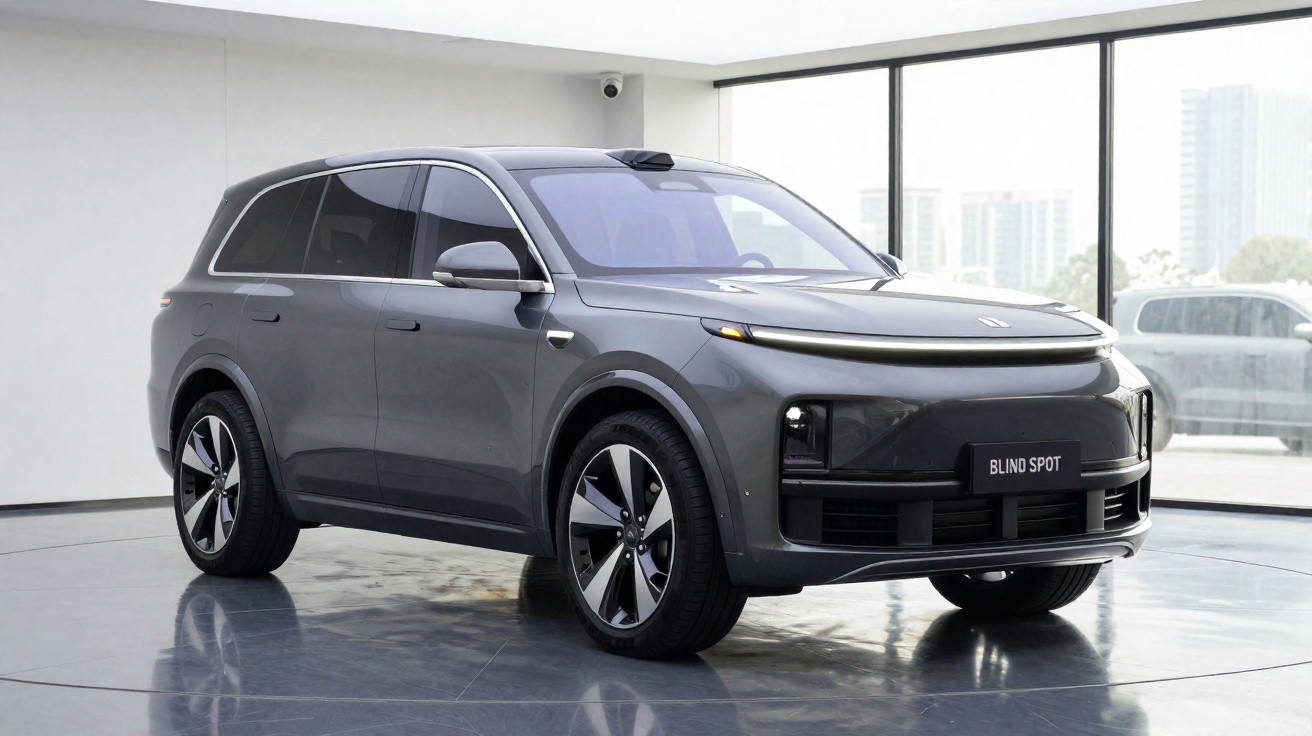
Many drivers know the sensation: you sit high up, surrounded by technology, feel cocooned - yet at the crucial moment it can seem as if you are staring into nothing. Wide A‑pillars, tall bonnets and narrow windows can erase whole sections of the road from view. What may sound like personal jitters shows up in measurements and crash figures as a very real safety issue.
How modern car design restricts the view outside
Driver aids, oversized touchscreens, chunky wheels, a muscular front end - today’s cars are meant to impress. But that design ambition often comes at the expense of what you can see from the driver’s seat. Between 2019 and 2025, ADAC examined more than 430 current models and measured the direct all‑round view using a 360‑degree camera positioned at the driver’s eye level.
"The measurements show: direct visibility from modern vehicles is measurably getting worse - especially in large, heavy models and many SUVs."
The worst blind areas are repeatedly caused by the same features:
- very wide A‑pillars (the front posts on the left and right of the windscreen)
- sharply raked windscreens
- a high window line and small side windows
- long, bulky bonnets
- raised rear sections with small rear windows
The more a body shell grows, the more material ends up in the pillars. On top of that come airbags, crash reinforcements and styling targets. The left A‑pillar is particularly critical: it can hide precisely the zone where cross‑traffic often appears at junctions.
When vans and EVs turn into near‑opaque walls
Problems become especially pronounced in vehicles with tall bodywork. Among the poorest performers, ADAC found many vans and high‑roof estate‑style vehicles featuring a double A‑pillar plus an additional vertical strut. From the driver’s eye line outwards, the view can be interrupted by a sequence of elements: mirror, front A‑post, the frame of a small triangular window, then a second post. A cyclist or motorcyclist can be almost completely concealed behind this stack.
With the Mercedes EQT, ADAC noted a further factor: the rear bench sits higher than in the internal‑combustion versions. As a result, a “wall” of headrests and seatbacks intrudes into the rearward sightline. ADAC records that low objects and children behind the vehicle are only noticed very late - or not at all. Combined with a high rear end, the blind zones while manoeuvring grow markedly.
That said, not every car follows this pattern. Small city cars show what better visibility looks like. Models such as the Seat Mii or Kia Picanto score well thanks to a comparatively upright windscreen, slimmer A‑pillars and generous glass areas, earning noticeably better results in visibility tests. In other words, the issue is linked to clear design trends rather than affecting all cars equally.
Taller bonnets, poorer visibility: figures from the US and Europe
It is not only pillars that are getting bigger; bonnets are rising too. The US insurance‑safety institute IIHS compared how much road a driver can directly see immediately in front of the car. In the Honda CR‑V, the visible share of the area within a 10‑metre radius in front of the vehicle fell from 68% (1997 model year) to 28% in the 2022 model. For the Chevrolet Suburban, the figure dropped from 56 to 28%.
"With some current SUVs, less than a third of the area directly in front of the windscreen can be seen from the driving position - the rest is a dead zone."
Transport & Environment also ran tests with SUVs and pick‑ups. The outcome: in some models, a child standing directly in front of the bumper remains completely invisible. This is no longer just a “blind spot”, but a genuine blacked‑out area right at the front edge of the bonnet.
A Belgian study involving around 300,000 road users goes further still: if bonnet height increases from 80 to 90 centimetres, the risk of death for pedestrians, cyclists and other car occupants rises by about 27%. High, angular fronts may look tough, but in a collision they are more likely to strike the chest and head rather than the legs. At the same time, they reduce the driver’s ability to see what is happening close to the vehicle.
What the crash figures reveal
The consequences are visible in the numbers - particularly at junctions and entrances. In Germany, ADAC says around 28% of crashes outside built‑up areas involve collisions while turning off, pulling out or crossing. Each year, more than 340 people are killed in these incidents and over 7,000 are seriously injured.
ADAC’s analysis concludes that roughly 30% of these junction or turning crashes happen because the priority traffic simply was not seen. Cyclists and motorcyclists are especially exposed: they are small and narrow, and can vanish behind a pillar at exactly the moment a driver decides, "Now I’m going."
In the US, IIHS reports a clear rise in casualties. The number of pedestrians killed has increased by around 37% in recent years, while cyclist fatalities have risen by 42%. Cars are not solely to blame, but poorer visibility and the boom in heavier vehicles add an extra layer of risk over everyday traffic.
Where blind zones become particularly dangerous
| Situation | Typical risk caused by poor visibility |
|---|---|
| Turning left at junctions | Cross‑traffic disappears behind the A‑pillar, especially motorcycles and e‑bikes |
| Turning right in town | Cyclists sit in the blind area between A‑pillar and mirror |
| Moving off at a zebra crossing | Pedestrians hidden by the A‑pillar or by a wide door mirror |
| Reversing out of a parking space | Children and low objects disappear behind a high rear end |
| Rolling forward at traffic lights or towards a queue | People standing directly in front of the car are invisible behind a tall bonnet |
Why driver aids do not solve the visibility problem
Many drivers now lean heavily on cameras and sensors. 360‑degree views, parking beepers, autonomous emergency braking - all of this can help when it works properly. Even so, ADAC stresses one point very clearly:
"Direct visibility is a permanent safety characteristic of a car - it does not depend on software, camera quality or menu settings."
A camera can get dirty, mist over or fail. A driver‑assist feature can be switched off unintentionally or respond too late. By contrast, the basic glass area in front of your eyes functions all the time - regardless of whether the infotainment is rebooting or the reversing camera has frozen. That is why electronic aids are not included in ADAC’s visibility rating.
ADAC is calling on manufacturers to treat all‑round visibility with the same seriousness as crash tests. In practical terms, that means shaping A‑pillars so they remain structurally strong while casting the smallest possible “shadow”. Offset reinforcements, different profiles or additional small windows can reduce dead zones without sacrificing rigidity.
Transport & Environment also argues for a firm limit: bonnets should be no higher than 85 centimetres. On average, new vehicles in Europe are already at around 83.8 centimetres, with a clear upward trend since SUVs have climbed from 12 to 56% market share. A cap would still allow styling freedom, but would rein in the most extreme outliers.
What drivers can do right now
If you are buying a new car, it is worth checking visibility before you sign anything. ADAC recommends a straightforward but effective showroom test:
- Set the seat, steering wheel and mirrors to your normal everyday position.
- Look deliberately to the front left and front right: what disappears behind the A‑pillar?
- Look diagonally rearwards and through the rear window: how thick are the pillars, and how much area can you actually see?
- Ask a second person to walk around the car or ride past on a bicycle.
Even while stationary, it becomes obvious whether you constantly need to lean and peer “around the pillar”. Anyone shorter or taller than average should try several seating positions. Raising the seat slightly can help in some cars, but in others it makes blind spots worse because you sit closer to the pillars.
On the road, active movement helps: deliberately shift your head and upper body slightly forwards and backwards, particularly when turning or moving off at junctions. That small change in viewpoint can move the blind area past your line of sight, and a previously hidden cyclist suddenly comes into view. This “shoulder check 2.0” may feel old‑fashioned, but it re‑opens exactly the areas modern bodywork tends to block.
Practical scenarios from urban driving
A typical morning in town: you are waiting at a junction and want to turn left. On the left is oncoming traffic; on the right there is a cycle lane. Just as you begin to roll forward, an e‑bike rider shifts into the zone behind the A‑pillar. If you do not lean slightly forwards, you may only see them once they are already directly in front of the bonnet.
Or you drive past a zebra crossing. A delivery van is parked on the right, an SUV is stopped on the left. A child runs out from in front of these vehicles. With a high bonnet, you spot the child very late. Only by braking deliberately, reducing speed and anticipating such situations do you give yourself time to react.
How design, safety and climate influence each other
Modern visibility issues do not exist in isolation. They are tied to a wider bundle of trends: more mass, more size, more power. SUVs can feel comfortable and secure, often offer plenty of space and provide a higher seating position. At the same time, they tend to worsen visibility, increase injury risk in collisions, and usually consume more energy.
Rising bonnets and higher window lines are not only a safety concern; they affect comfort too. In summer, dark, closed‑in body shapes heat up more. Strong all‑round visibility with plenty of glass can reduce stress because the driver can read the surroundings more intuitively, rather than relying on screens and warning beeps.
For manufacturers, this creates a balancing act: they must reconcile crash regulations, styling demands and aerodynamics while still keeping visibility and pedestrian protection in view. For buyers, a clear‑eyed assessment pays off: the emotionally striking car with a massive front can be more tiring and harder to place on the road than an unflashy small car with large windows.
Choosing, testing and driving more consciously today not only reduces your own risk. It also protects more vulnerable road users and sends a clear message to the industry: safety does not begin with a display, but with what a driver can see with their own eyes.
Comments
No comments yet. Be the first to comment!
Leave a Comment