
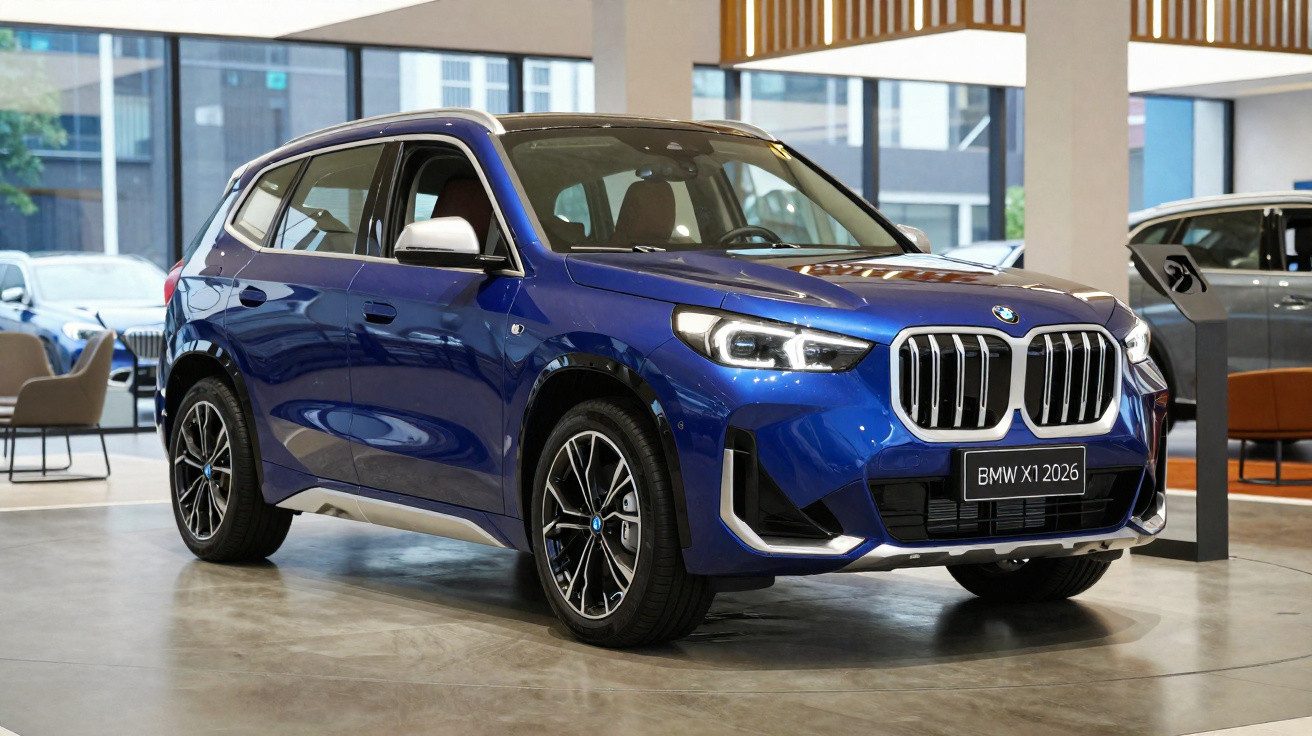
Both compact SUVs are aimed at buyers who want a premium badge without immediately drifting into plug-in hybrid pricing north of €55,000. Audi puts the newly updated Q3 on the grid with a 150 PS petrol engine, while BMW answers with the X1 as the sDrive20i with 170 PS. On paper they look closely matched, yet in day-to-day use the gap between the two approaches is surprisingly wide.
Concept and prices: two entry versions that stopped being “entry-level” a long time ago
In its cheapest TFSI form, the Audi Q3 comes with 150 PS and mild-hybrid tech from €43,850 in Design trim. In the sportier S line (as driven here), you are effectively at around €50,000 before adding any options.
The BMW X1 sDrive20i with 170 PS in M Sport spec appears more expensive at first glance, because its list price starts at €50,900. That puts both test cars in almost the same ballpark. The real differences show up elsewhere: standard equipment levels and the way the options lists are structured.
“If you’re not careful, you can quickly end up at the dealer with an €80,000 compact SUV - at least with the Audi Q3, there’s hardly any limit to the upward price spiral.”
With the Q3, the options ceiling sits at more than €20,000; one fully loaded long-term test example came to €82,320. The X1 runs out of road at roughly €15,000 in extras. Even so, the BMW tested here came across as noticeably more upmarket in a direct comparison.
Cabin and everyday use: where “premium” really becomes visible
Perceived quality: the BMW feels a class above
In the test Audi Q3, the optional kit was fairly modest: around €3,100 for paint, 19-inch wheels, a black styling pack and tinted windows. The BMW X1, by contrast, carried a hefty €14,750 options bill - including comfort items such as a panoramic glass roof, electrically adjustable seats and a heated steering wheel.
Even so, part of the X1’s visual impact comes simply from the M Sport trim. Alcantara seats with blue contrast stitching are standard here, and the trim strips and materials look more thoughtfully chosen. In the Q3, more functional cloth upholstery dominated, which does not always feel fully in line with the asking price.
“Subjectively, the X1’s interior feels like it belongs to a higher class of car - the Q3 is surprisingly restrained without major options packs.”
Infotainment and controls: Audi scores with a logical screen layout
When it comes to usability, the picture flips. The Q3’s central touchscreen operates smoothly, responds quickly and is arranged in a very intuitive way. Menus are clearly labelled, and frequently used functions such as driving modes or assistance systems sit close to the driver.
In the X1, the system feels more complicated. Some menu paths lead to dead ends, switching off speed warnings is awkwardly buried, and the “Personal” driving mode cannot be tailored as freely as the name suggests. If you enjoy tweaking fine details, you will end up hunting around more than you should.
Space: more rear legroom in the BMW, more carrying capacity in the Audi
Both SUVs have a sliding rear bench. With it pushed all the way back, the BMW X1 delivers the airier impression: more knee room, a higher seating position, and easy access. The Q3 puts in a solid showing too, but it does not quite match the same sense of generosity.
In the boot, Audi turns the tables:
- Audi Q3: 550 dm³
- BMW X1: 466 dm³
Families, or anyone regularly travelling with lots of luggage, clearly benefit from the Q3’s larger load bay. Both offer adjustable boot floors and folding rear backrests - but in terms of basic capacity, the advantage plainly goes to Ingolstadt.
Driving experience: three cylinders beat four - against expectations
Engine character: the quieter Bavarian, the more dutiful Ingolstadt
On paper, the Audi looks like the more conventional choice with its 1.5-litre four-cylinder. In practice, that first impression fades quickly. The X1’s three-cylinder note is only briefly noticeable on a cold start and then largely melts into the background.
At everyday speeds the X1 feels better insulated, quieter and generally more refined. When you accelerate, the engine becomes more audible, yet it spins up more eagerly and with more character than the Q3’s very even-tempered four-cylinder. The Audi delivers power in a linear way, but can also come across as a little unwilling.
The numbers underline the difference: the BMW accelerates and pulls more convincingly for overtakes, and over the kilometre sprint it is almost two seconds quicker than the Audi. Mild-hybrid assistance in the X1 also creates a more immediate response to throttle inputs and stronger recuperation when you lift off.
Suspension, steering, tyres: the X1 is clearly more dynamic
Both test cars ran on 19-inch wheels and a fairly firm set-up. In town, that means the Q3 and X1 can feel stiff, with expansion joints and potholes making their way into the cabin. As speeds rise, the BMW smooths the surface better, runs more quietly, and stays more composed when pushed.
A key factor is the tyre choice. The X1 wore Pirelli P Zero tyres, which deliver huge grip, especially in the wet. The Q3 came on Bridgestone Turanza rubber, which can struggle more to put its power down when accelerating hard on damp roads.
“Driving enjoyment, stability, reserves: the X1 feels more assured and comes across as the more mature package on long runs.”
Only under braking does the Q3 claw back some ground. Its system bites harder, particularly at higher speeds, and the pedal feels very direct. Still, that is not enough to change the overall picture: taken as a whole, the X1 delivers the clearly stronger dynamic performance.
Costs, consumption and options: where the money really goes
Looking at running costs, the Audi tends to fare worse. Its CO₂ output is higher, which can translate - depending on the market - into more noticeable environmental charges. In the test it also used slightly more fuel, regardless of route type.
The X1’s main drawback is simply its relatively small fuel tank: despite sensible consumption, range sits at around 650 kilometres. That is fine for holiday journeys, but it does mean frequent drivers will have to stop a bit more often.
Equipment strategy is where things get interesting. Comfort access with keyless start costs extra with both manufacturers - a detail that is now often standard even with much cheaper brands. If you are treating yourself to a premium SUV, it pays to check carefully which packages you truly need.
| Model | Power | Base price | Test car price without extras | Maximum options | Boot volume | Cylinders |
|---|---|---|---|---|---|---|
| Audi Q3 TFSI 150 S line | 150 PS | 43.850 € | ca. 50.000 € | > 20.000 € möglich | 550 dm³ | 4 |
| BMW X1 sDrive20i M Sport | 170 PS | 50.900 € | 50.900 € | ca. 15.000 € | 466 dm³ | 3 |
Strengths and weaknesses at a glance
BMW X1 sDrive20i M Sport
- high motorway comfort
- very premium cabin ambience
- generous rear-seat space
strong, lively engine
nested menu structure in the infotainment
three-cylinder sound is not for everyone
digital instruments look visually plain
Audi Q3 TFSI 150 S line
- very user-friendly central display
- the largest boot in this head-to-head
strong brakes with a good pedal feel
noticeably weaker performance
instrument cluster looks comparatively small
quite firm ride around town
Which SUV suits which driver?
The BMW X1 is a great fit for drivers who cover big distances, want a high-quality cockpit and relaxed long-haul ability, and are not put off by a three-cylinder on principle. The engine feels eager, fuel use stays reasonable, and both ride and refinement are particularly convincing on the motorway.
The Audi Q3, meanwhile, plays its trump card in practicality. If you regularly need to carry a pushchair, crates of drinks or sports gear, you will appreciate the significantly bigger boot. It will also suit anyone who values self-explanatory infotainment and does not want to tap through sub-menus for minutes on end.
Both models show just how much a configuration can change the experience. A sparsely specified premium SUV can disappoint quickly, while a smartly chosen spec can suddenly feel like half a class above. Spending a few hours in the configurator and setting clear priorities can make your budget go much further.
If your priorities are boot space, straightforward controls and a traditional four-cylinder feel, the Q3 is a sound companion - but you will have to live with higher overall costs. If you put dynamics, comfort and that premium feel first, you will almost inevitably end up with the X1, which in this 2026 comparison leads in the key disciplines.


Comments
No comments yet. Be the first to comment!
Leave a Comment