
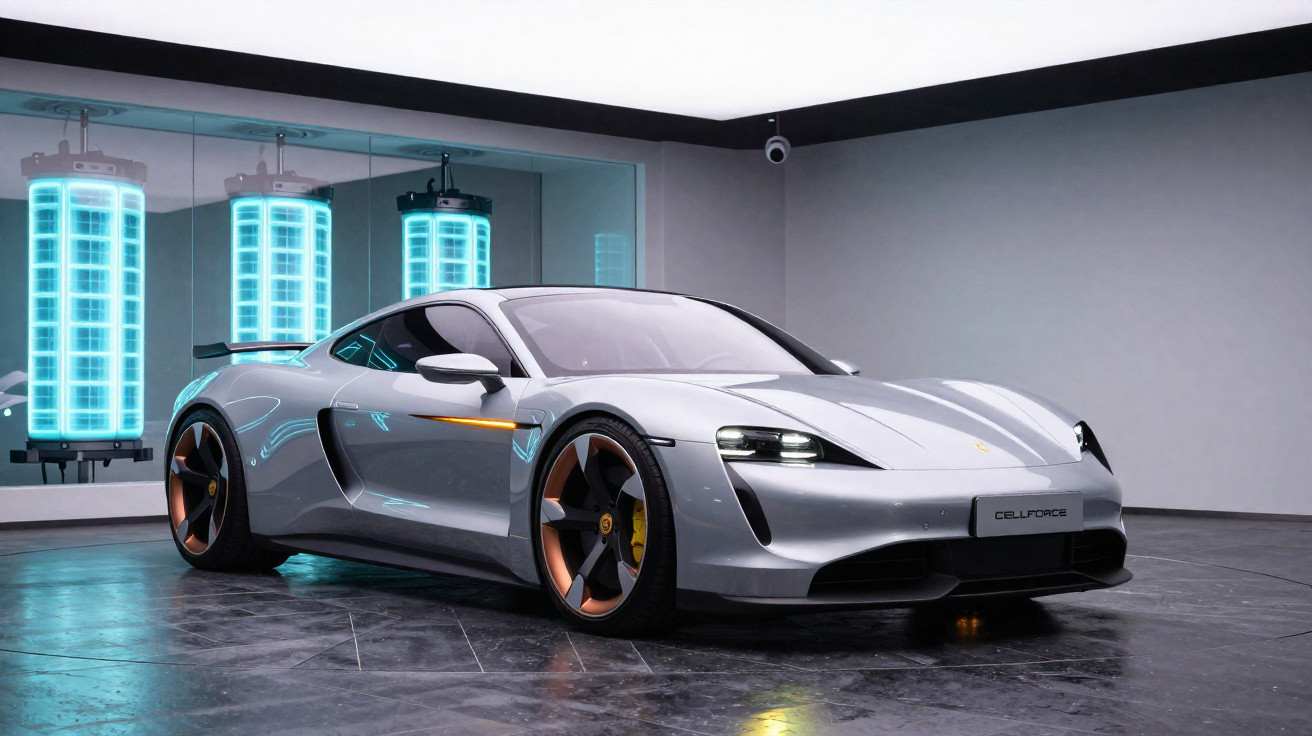
The tremor could travel from Stuttgart straight into every gigafactory planning model.
Porsche is backing away from a route it committed to only a few years ago, re-centring its battery plans on high-performance research rather than large-scale manufacturing. That change of direction reshapes its battery subsidiary, alters what suppliers had been gearing up for, and serves as a warning to rivals whose EV strategies depend on scale.
Why Porsche is shifting gears on batteries
Porsche’s recent EV drive was built on the belief that owning the most critical element - the cell - would protect both vehicle performance and profit margins. That calculation has shifted. With global demand growth cooling, capital becoming harder to justify, and fierce price competition in the US and China, a small in-house cell facility looks vulnerable when compared with mega-sites operated by established cell suppliers.
Earlier plans pointed to an initial production location near Kirchentellinsfurt at about 1 GWh, followed by a second site. Porsche’s leadership now argues that output at that level cannot generate the economies of scale required to compete on cost. Instead, Porsche intends to turn its Cellforce Group into a self-standing R&D organisation focused on advances in power density, charging speed and long-term durability.
Porsche stops its plans for in-house cell manufacturing and turns Cellforce into an independent R&D driver for high-performance batteries.
What changes at Cellforce
Cellforce will not be running a gigafactory. Its remit becomes designing chemistries, cell formats and thermal concepts aimed at consistent track capability and very rapid rapid-charging for everyday road use. By removing the drag of tooling decisions and yield ramp-ups, teams can iterate more quickly. Porsche can then procure high-volume cells through partners, while applying its own proprietary approaches where they make the biggest difference.
Its remit also ties directly into Volkswagen Group’s PowerCo - the battery competence centre that defines standards and assigns development work. The exchange runs in both directions: Cellforce can develop high-power solutions, and PowerCo can industrialise those that make sense at group scale.
The emphasis moves away from commodity cells and towards niche, high-power chemistries that support Porsche’s all-electric future models.
The 2 billion question: who carries the risk now?
This isn’t only an engineering story; it is a financial one. Suppliers that had positioned themselves for tooling, pilot lines and materials to support a boutique plant may now need to reassess. Analysts suggest that as much as 2 billion of intended spending linked to small-scale European capacity and dedicated equipment could be revised, postponed or redirected into more flexible production platforms.
Write-downs are never popular. Even so, distributing risk across larger factories serving multiple customers can help keep unit costs under control, while Porsche holds onto performance-critical intellectual property. Put simply, Porsche is choosing to fund the brains first and the steel second.
The change puts up to 2 billion of tightly linked battery investment at risk, while reducing Porsche’s exposure in an uneven EV market.
Where the technology heads next
In this context, “high-performance cells” is not synonymous with chasing maximum headline range at any cost. Porsche’s priorities are instant power delivery, repeatable lap performance and quick top-ups. That direction implies silicon-rich anodes, tougher separators, improved binders and more aggressive cooling architectures. It also points towards smarter battery management capable of reading state of charge accurately, so drivers can lean on performance with less range anxiety.
Porsche already works with German specialist V4Smart on ultra-high-power lithium-ion cells used as “booster” packs in the 911 GTS. It is reasonable to expect broader use of this concept in additional hybrids, where a compact, high-rate sub-pack handles peak bursts while the main pack - or the combustion engine - carries steady cruising.
What changes for future models
- Prototype cells aimed at high C-rates for consistent track sessions.
- Thermal layouts designed to keep performance steady above 60–70% state of charge.
- Battery management calibrated for quicker, flatter fast-charge curves.
- Tighter coordination between cell design, inverter mapping and chassis control.
A market that grows, but not evenly
Electrification is not falling apart; it is progressing unevenly. In Europe, 57% of vehicles delivered in the first half of 2025 were electrified once hybrids are included. Worldwide, the comparable share was about 36%. Price compression in China, unpredictable incentives in North America and charging infrastructure constraints make projections harder and leave factory utilisation plans less certain.
In that environment, a sports-car manufacturer cannot risk being left with a stranded gigafactory. Porsche’s pivot keeps it nimble. If demand accelerates, it can draw volume from partners among the major Asian and European cell producers. If demand softens, it can keep the R&D machine running without carrying a large depreciation burden.
Europe edges beyond half of new deliveries electrified, while the world sits near a third - too inconsistent to justify a small dedicated cell plant.
How this plays with Volkswagen Group
For PowerCo, this creates access to a specialist lab it can brief for high-end applications. For Porsche, it clarifies a route to define premium chemistries without taking on the risk of mass production. If Cellforce lands on a design that scales, the wider group can still benefit: PowerCo can feed it into unified cell production lines.
The structure echoes the way motorsport development informs road cars. The R&D unit pushes to the limit; the group’s factories standardise whatever proves itself under testing.
What rivals should take from this
Manufacturers face a clear strategic split: follow a supplier-led model and reallocate capital towards software and system integration, or continue investing heavily in cell plants to increase vertical control. There is no universal solution. Tesla gains from scale. Pure-play start-ups typically depend on partners. Established brands can blend approaches, but few can keep niche plants profitable for long.
Mass production versus R&D-first: a quick comparison
| Aspect | Mass production | R&D-first |
|---|---|---|
| Upfront capital | Very high | Moderate |
| Speed to scale | Slow ramp, years | Fast prototypes, outsource scale |
| Unit cost at high volume | Low if fully utilised | Depends on supplier contracts |
| Innovation cadence | Constrained by tooling | Fast iterations |
| Risk in demand dips | High stranded asset risk | Lower fixed cost exposure |
| Performance differentiation | Hard if using commodity designs | Strong via proprietary chemistries |
Key signals to watch next
Look for Porsche to publish a next-generation high-power cell specification and to name a manufacturing partner to supply volume programmes such as the Taycan. Watch for wider hybrid adoption of ultra-high-rate sub-packs within the 911 line-up. Also track how PowerCo aligns its unified cell approach with Porsche’s niche performance requirements without fragmenting production.
Useful context for readers
What does 1 GWh actually mean?
A 1 GWh facility can supply roughly 12,500 packs for an 80 kWh premium EV, or tens of thousands of smaller hybrid packs. For a global brand, that is boutique scale. Major cell plants typically operate at 20–40 GWh or more, enabling fixed costs to be spread and supplier pricing to be pushed harder.
Why state-of-charge accuracy matters
Performance EVs depend on precision. Accurate state-of-charge estimation allows the vehicle to sustain full power for longer, plan thermal preconditioning ahead of a fast charge, and avoid overly cautious buffers that reduce usable energy. Better algorithms can feel like an unseen battery upgrade.
Risks and advantages of Porsche’s move
- Advantage: Reduced capital intensity protects returns through demand swings.
- Advantage: Quicker chemistry iteration helps preserve the brand’s performance edge.
- Risk: Reduced control over supplier allocation in a constrained market.
- Risk: Cost exposure if partners increase prices or if currency moves become painful.
- Mitigation: Multi-sourcing via group channels and long-term offtake agreements.
What this means for drivers
If Porsche delivers on this approach, owners should get cars that fast-charge hard, sustain hard driving and age well. Expect shorter rapid-charging stops, stronger mid-range boosts and improved heat control on demanding roads. The brand can concentrate its engineering effort where it matters most, while larger factories produce cells at scale.
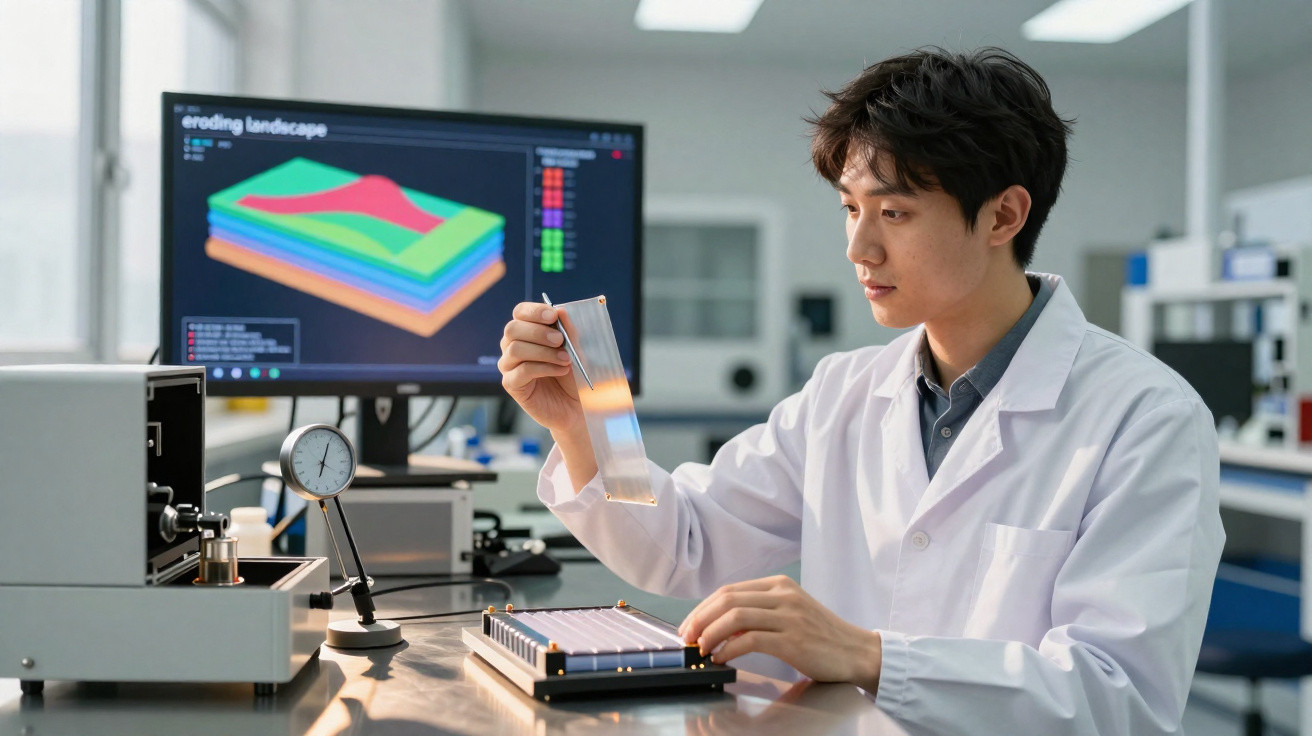
For investors and suppliers, the signal is straightforward: keep the R&D engine well supplied, stay flexible with capital, and avoid becoming attached to bespoke factories that cannot justify themselves. The next breakthrough may come from a laboratory bench rather than a new building.

Comments
No comments yet. Be the first to comment!
Leave a Comment