
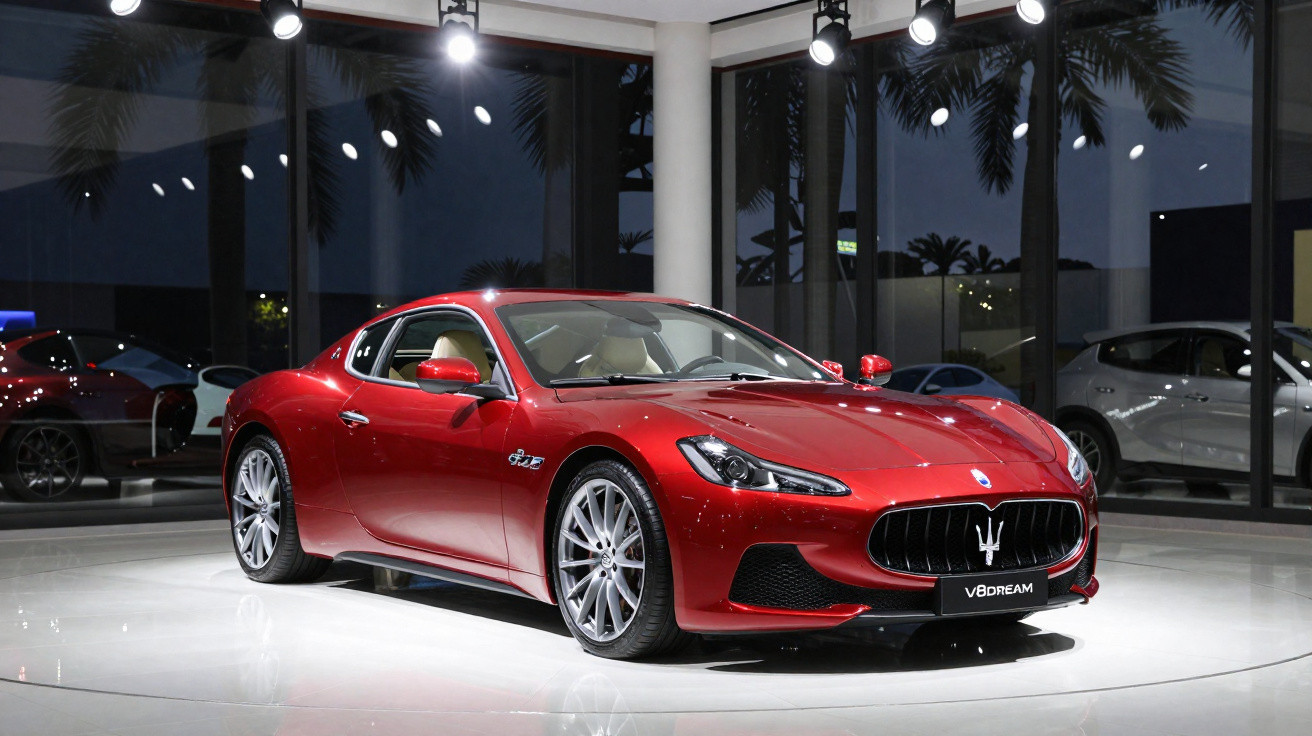
A Pininfarina-penned Maserati with a big-capacity V8 that once cost well into six figures-yet today is priced like a brand-new Dacia Duster. That is exactly the kind of listing currently causing a stir: a 2009 Maserati GranTurismo advertised for about €25,000, turning the usual price logic of the car market on its head.
Italian dream coupé for the price of an everyday SUV
The Maserati GranTurismo is widely seen as one of the most graceful coupés of the 2000s. It has the classic grand tourer proportions: a long bonnet, a wide grille, muscular shoulders and, behind the front seats, two token emergency rear seats. When it launched, the list price sat comfortably above €100,000, and with the right options it climbed noticeably higher.
Today, some dealers are offering the luxury coupé for just under €25,000-roughly in the same bracket as a well-specified new Dacia Duster.
The car being talked about right now is a 2009 example, listed at €24,990. For something that, 15 or so years ago, would more commonly have been parked in the garage of a business owner, professional athlete or very wealthy collector, that figure feels almost unreal.
Pininfarina design: timeless rather than dated
The shape is the work of the famed Pininfarina design house. Even now it still looks current: no sharp, aggressive creases, but rounded, flowing surfaces, paired with a broad rear end and the signature Maserati side vents in the front wings.
Back in the day, many road tests called it an “automotive seducer”, and that verdict has aged well. Where some sports cars from the same era now look old-fashioned, the GranTurismo still makes plenty of enthusiasts turn their heads.
A significant advantage of this particular car is the claim that it remains completely original. No retrofitted, excessively loud exhaust systems, no questionable lowering kits, no DIY wheel choices. With this model, that is far from guaranteed, as many cars have lost their factory look over the years thanks to various tuning experiments.
Under the bonnet: naturally aspirated Ferrari V8
The real headline act lives up front beneath the long bonnet: a 4.2-litre naturally aspirated V8 developed in Maranello. It produces 405 PS and 460 Nm. No turbochargers and no electrical assistance-just a classic, high-revving V8 with plenty of character.
Later on, the range also included 4.7-litre versions with more power. Among enthusiasts, the V8 has a strong reputation for durability provided servicing and oil changes are carried out properly. Well-maintained cars covering well over 100,000 km are not unusual, and some examples even pass the 200,000 km mark.
The Ferrari V8 is considered dependable if servicing and oil quality are right-the engine itself is rarely the troublesome part.
The gearbox question
Early cars with the sequential gearbox can be a different story. This automated manual transmission is sensitive to incorrect use and, as it ages, can lead to costly repairs. From 2009, Maserati increasingly fitted a six-speed ZF torque-converter automatic to many models, which tends to cause far fewer headaches in real-world ownership.
The advertised car sits right in that transition period and is said to have the more dependable automatic. According to the listing, the engine-and-gearbox pairing operates without issues.
An unusual colour combination instead of the usual grey uniform
Visually, the car on offer also stands out. Rather than the typical grey or black paintwork, it comes in a dark red exterior colour, matched with a beige and dark red cabin. The effect is upmarket and helps it avoid blending in with the more understated combinations seen most often.
The odometer shows around 99,000 km. For a sports coupé of this age, that is a normal figure-neither exceptionally low nor alarmingly high. What matters more than the mileage is the maintenance record: if oil services, spark plugs, belts and brakes have been done on schedule, the distance covered is not, by itself, a reason to walk away.
Where the catch lies: import status, MOT (TÜV) and running costs
The deal is not without its downsides. This GranTurismo was originally delivered to Dubai and later imported into Germany. The dealer states that import duties and taxes have been taken care of, but there are important caveats:
- No valid German roadworthiness certificate (TÜV)
- No German registration yet
- Testing and registration are entirely the buyer’s responsibility
This is the main reason the asking price is so low. The seller says it sits around €5,000 to €7,000 below comparable examples on the German market that are already fully registered. Anyone able to manage the approval process themselves-or who has a trusted workshop to handle it-could save a meaningful amount of money.
On the plus side, the purchase price includes four new tyres, and delivery is offered. For buyers who live further away, that can make the first step a little less stressful.
Why a “cheap” Maserati can still be expensive
The sticker price is only the entry ticket. Ongoing costs for an Italian V8 grand tourer are on a completely different level compared with a Dacia or a compact SUV.
| Item | Maserati GranTurismo | Dacia Duster (new) |
|---|---|---|
| Insurance | high, often with a sports-car surcharge | significantly lower |
| Fuel consumption | typically 15–20 l/100 km in real use | often under 8 l/100 km |
| Tyres | wide, expensive sizes | smaller, cheaper sizes |
| Servicing | costly parts, labour-intensive work | simpler design, cheaper servicing |
A major service on the Maserati can easily run into four figures. If brakes or suspension components are also due, you can quickly approach the cost of a new Dacia-only this time in workshop invoices rather than a new-car purchase.
The tempting purchase price should not distract anyone from the fact that upkeep and repairs are priced at luxury-car levels.
Who this offer genuinely suits
A car like this is not aimed at buyers who simply want the cheapest possible way to get from A to B. The most likely audience looks more like:
- car enthusiasts with a soft spot for Italian sports cars
- drivers with a solid financial buffer for repairs
- people looking for a second- or third-car project
- hands-on owners with access to independent workshops and parts sources
If you have to watch every pound before spending it, a GranTurismo is unlikely to be a happy choice. If, however, you want an emotional car and you size up the costs realistically, this is a lot of charm, sound and prestige for the money.
What prospective buyers should check before a test drive
Anyone shopping for a rare car like this should prepare carefully. A few areas deserve particular attention:
- examine the service book and invoices closely
- listen to the engine from cold and when warm (any unusual noises?)
- check the gearbox shifts smoothly, without jolts
- test the electrics: windows, infotainment, air conditioning, parking sensors
- assess the suspension for knocks, rattles and uneven tyre wear
Ideally, you would view the car with a specialist inspector or a workshop familiar with Maserati. That costs money up front, but it can prevent extremely expensive surprises later.
Why listings like this are appearing more often
Luxury and sports cars from the 2000s are increasingly reaching an age where many first and second owners decide to move on. At the same time, rising repair bills and tighter environmental rules put off would-be buyers. The result is that prices drop into ranges that can tempt more “ordinary” drivers.
Cars with large petrol engines, in particular, tend to depreciate because they no longer align with today’s fuel-saving and CO₂-focused trends. Enthusiasts benefit from this, as they can deliberately hunt for emotional dream cars that have already taken the big depreciation hit.
Sports-car fantasy versus everyday reality
In the end, it comes down to a simple question: do you want the most sensible car possible-or do you deliberately want something irrational that sends a shiver down your spine every time the V8 fires?
A new Dacia Duster brings a warranty, lower repair bills and far less risk. A Maserati GranTurismo with a Ferrari V8, by contrast, offers a soundtrack, presence and driving experience from a class many people could otherwise never justify. Anyone taking that step should do the sums honestly and then decide, with eyes open, whether the fascination is worth the extra running costs.
Comments
No comments yet. Be the first to comment!
Leave a Comment