
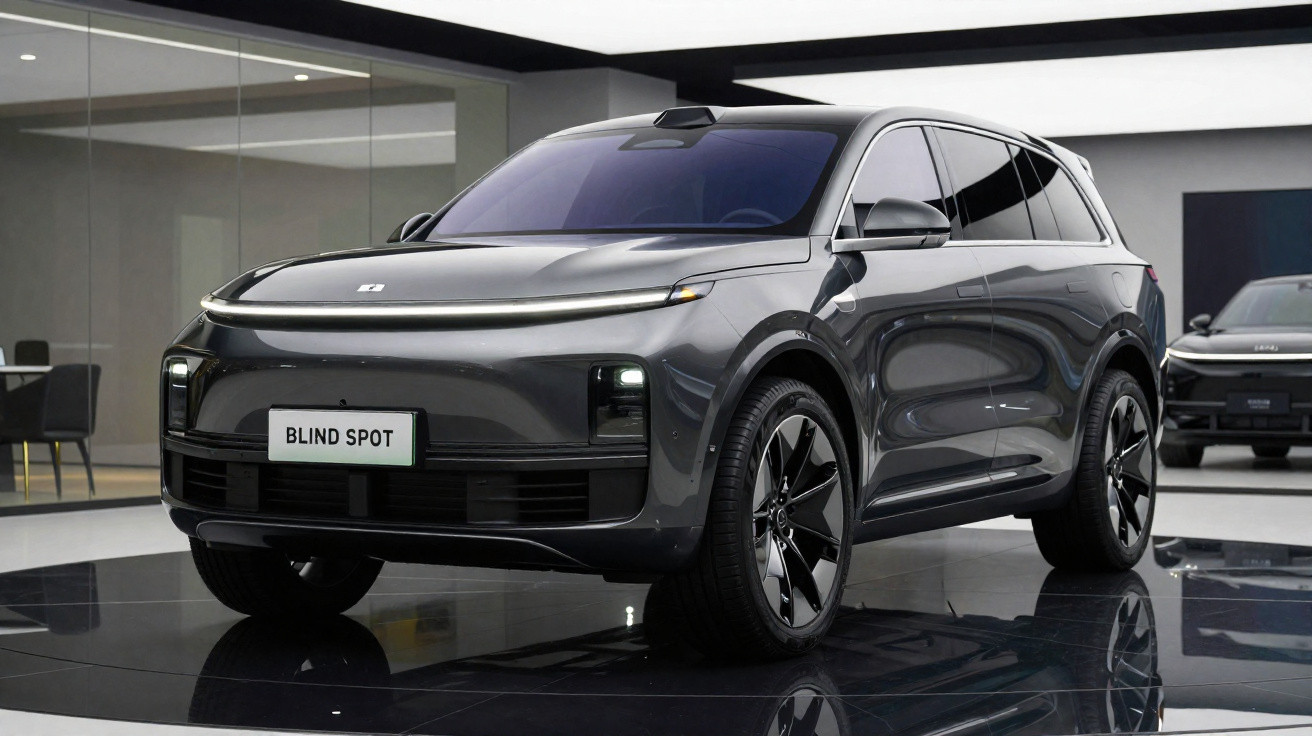
In many new cars you feel safe, but you can see less: wide pillars, high bonnets and small windows create dangerous gaps in your field of view.
Climb into a modern SUV or people carrier today and you’re perched high up, surrounded by big displays and a long list of driver aids. Yet an odd sensation often follows: when turning, the view to the left can feel cut off; when manoeuvring, children or bollards can seem to vanish. This isn’t anxious-driver imagination, but an increasingly recognised safety issue that ADAC, IIHS and Transport & Environment now describe in plain terms.
How modern car design takes visibility away from the driver
New cars are styled to look dynamic, substantial and “safe”. That same design direction, however, often reduces what you can see directly around the vehicle. ADAC examined more than 430 current models and measured all-round visibility from the driver’s viewpoint using a 360-degree camera. The pattern was clear: the larger and heavier the vehicle, the worse it often performs.
- Wide A-pillars: they help in rollovers and house airbags and speakers - but they can also hide an entire person.
- Raked windscreens: they create a sporty profile, yet they effectively lengthen the pillars and increase blind spots.
- High waistlines: windows shrink, bodywork grows, and the outward view becomes more restricted.
- Long, tall bonnets: an unseen zone forms immediately in front of the car, where children can disappear completely.
Particularly troublesome are MPVs, high-roof estates and some electric conversions. In the Mercedes EQT, for example, the rear bench sits higher than in the combustion-engine versions. That shifts children higher in the rear-view mirror, reduces the rearward view, and means low objects behind the car often appear very late - or not at all.
Small, traditional city cars tend to fare very differently. Models such as the Seat Mii or Kia Picanto, with more upright windscreens, slimmer A-pillars and generous glass areas, offer a comparatively open view. ADAC gives these cars respectable grades because drivers can see a lot even without assistance systems.
"The safest camera is the human eye - provided the car doesn’t block its view."
How sharply visibility has deteriorated in larger vehicles is illustrated by figures from the US IIHS. In the Honda CR‑V, the visible share of roadway within the 10-metre zone in front of the bonnet fell from 68 percent (model year 1997) to just 28 percent for the 2022 model. A Chevrolet Suburban dropped over the same period from 56 to 28 percent. In front of these vehicles, areas can become literally invisible.
Where the new blind spots become especially dangerous
The consequences show up clearly in crash data. According to ADAC, around 28 percent of all collisions outside built-up areas involve joining, junction and turning scenarios. Each year in Germany, more than 340 people die in these situations and over 7,000 are seriously injured.
ADAC’s analysis indicates that roughly 30 percent of these crashes occur because a road user with priority is simply not seen. The missed traffic most often comes from the left - precisely where a thick A-pillar can obstruct the view when turning or merging.
Cyclists, children, pedestrians: the unseen victims
Those most affected by this design trend are “vulnerable road users”: cyclists, pedestrians, motorcyclists and children. Because their outlines are narrow, they can be fully concealed by a pillar at the exact moment a driver makes the decision: “I’m going now.”
Studies from the United States suggest that, at some junctions, certain current SUVs and pick-ups can hide a pedestrian or cyclist entirely behind the A-pillar. In some cases, less than a third of the area in front of the vehicle remains visible within the 10-metre range. Over a similar timeframe, pedestrian deaths rose by around 37 percent and cyclist fatalities by about 42 percent.
A Belgian study involving 300,000 road users points to another factor: if bonnet height increases from 80 to 90 centimetres, the risk of death for pedestrians, cyclists and other drivers rises by roughly 27 percent. A high front end, a steep, wall-like surface and poor close-range visibility not only make impacts more severe - they also make them harder to avoid because the hazard is seen later.
"A tall SUV projects strength - but for people in front of it, it often means a higher risk of being overlooked."
What drivers can do in day-to-day driving
Motoring organisations advise treating visibility as a key criterion even before buying. A test drive shouldn’t focus only on performance and infotainment; it should also include the simple question of how well you can see out.
Test-drive checklist
- Sit in your final, preferred driving position and set the seat and steering wheel as you would for everyday use.
- Check deliberately how much the A- and B-pillars narrow the view to the left and right.
- During shoulder checks for cyclists and lane changes, note whether vehicles disappear into blind spots.
- Reverse-park and assess how clearly you can see children, posts or other low obstacles.
- Drive straight up to a marker (for example, a kerb or cones) and test when you genuinely spot it from the driver’s seat.
Even if you already own the car, you still have options. Many drivers underestimate how much difference active movement makes. When turning, consciously leaning your upper body slightly forwards and to the side can significantly reduce the area hidden behind the A-pillar. It may take a second, but it can reveal the crucial glimpse of a cyclist.
Raising the seat a little also often helps, because a small change in eye position can make pillars feel somewhat less obstructive. The rule is simple: as long as you can operate the pedals safely and your head isn’t pressed into the headlining, try a few millimetres more height.
Why cameras and sensors are not a complete solution
Many buyers place their faith in 360-degree cameras, parking aids and emergency braking. The assumption is that modern technology will neatly compensate for expanding blind zones. Safety organisations explicitly caution against that expectation.
Direct vision works all the time - regardless of software version, screen size, dirt on a lens or a sensor fault. Camera views are only partial, often distorted and limited in angle. In some cars, displays are mounted so low in the dashboard that your gaze drops away from the road, which can quickly become critical in slow-moving urban traffic.
"Assistance systems are like airbags: excellent to have - but no substitute for a clear view through glass."
For that reason, ADAC does not include electronic aids in its visibility ratings at all. The message to industry is that direct all-round visibility should be treated as a standalone safety objective, on a comparable footing to crash protection or lane-keeping assistance.
What manufacturers and policymakers could change
Experts argue there are many levers manufacturers can pull without abandoning safety or design entirely:
- A-pillars using hollow sections or split structures that remain strong but appear slimmer.
- More upright windscreens for urban vehicles, where aerodynamics are less decisive.
- Larger window areas towards the rear, especially in family cars and MPVs.
- Clear limits on bonnet height for new vehicles.
Transport & Environment proposes a legal upper limit of 85 centimetres for bonnet height. The context: since 2010, average bonnet height in Europe has already risen by about seven centimetres to around 83.8 centimetres. Over the same period, the market share of SUVs in Europe increased from 12 to 56 percent. The wider and taller the front end becomes, the harder it is to see what’s close in front of the car.
Why the XXL-car trend affects everyone
You don’t need to drive an SUV yourself to be affected. Anyone waiting at a pedestrian crossing or cycling past parked vehicles is now moving through traffic where cars generate ever larger blind areas. Children are hit particularly hard because they are smaller and therefore more often below a driver’s line of sight.
Parents can help by practising common danger points with their children: never step straight out from in front of parked cars, seek eye contact with drivers, and at junctions pay particular attention to high-bodied vehicles. At the same time, pressure is increasing on manufacturers and legislators to make vehicles safer not only for occupants, but also for people outside.
Terms such as “visibility triangle” and “direct vision” are therefore becoming more important. The visibility triangle describes the area a driver can see directly ahead without relying on mirrors or cameras. When that triangle shrinks, dependence on technology grows - along with vulnerability to mistakes. As vehicles continue to get bigger, this seemingly simple measure is moving to the centre of safety debates.
In everyday practice, that means treating visibility as seriously as stopping distance and airbags when buying or driving a new car. Not every styling trend can be corrected with sensors. Good all-round visibility starts with metal and glass - and with a driver who doesn’t just sit back, but actively works to see what’s outside.
Comments
No comments yet. Be the first to comment!
Leave a Comment