
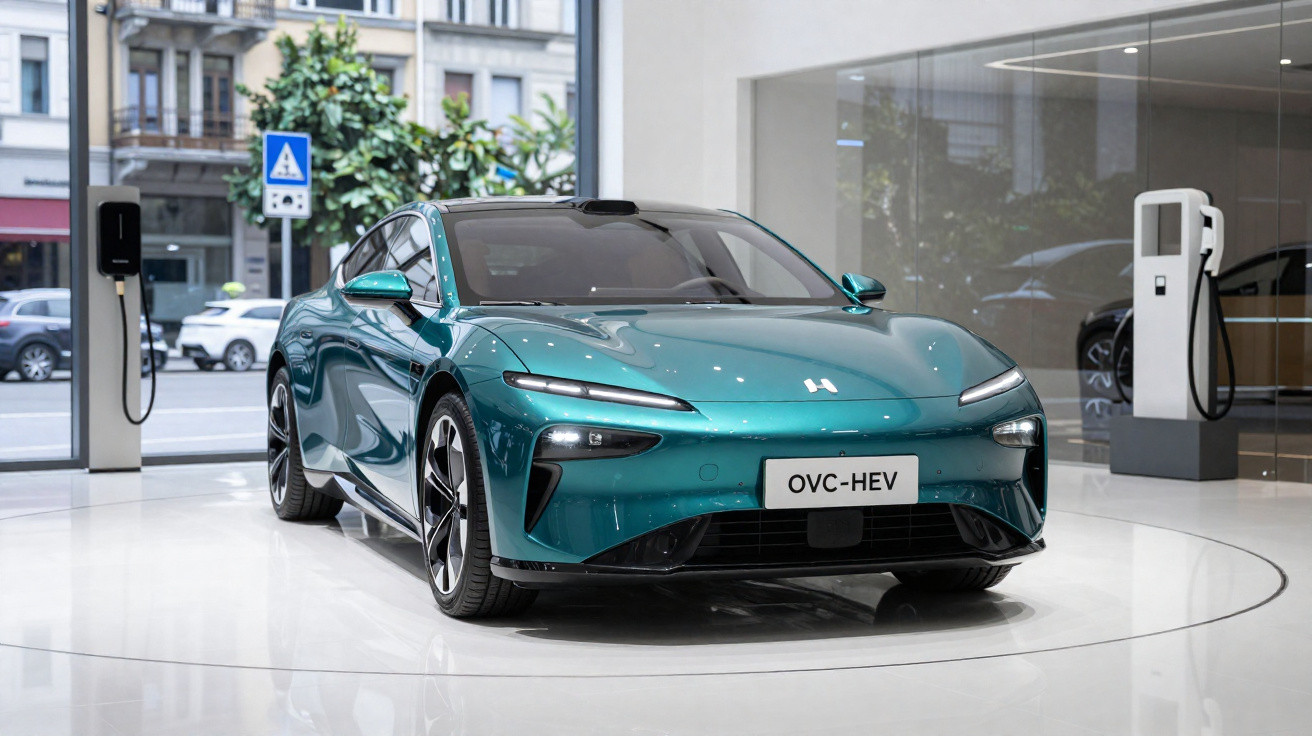
Over the past few months, a new type of vehicle has been appearing in European car showrooms: electric cars with a so‑called range extender. It sounds like the ideal cure for charging anxiety - but technically and legally it comes with far more complications than sales staff tend to mention.
What’s really behind cars with a range extender
At first glance, the underlying idea seems brilliantly straightforward: you drive on electric power day to day, and a small internal-combustion engine under the bonnet steps in only as a generator once the battery is depleted. In other words, it isn’t meant to drive the wheels directly - it is there to produce electricity for the electric motor.
Chinese manufacturers in particular - including Leapmotor - are pushing these setups into Europe. While many European brands are still trying to bring down the cost of their pure electric cars, newcomers are pitching a simple promise: "Drives like an electric car, refuels like a petrol car when needed."
In the brochure, the range extender looks like a back-up generator on wheels - but in EU type approval it ultimately ends up as just another hybrid.
From an engineering perspective, the distinction from a conventional plug-in hybrid sits in the fine print:
- larger battery, often 20–40 kWh instead of 10–25 kWh
- electric-only range commonly 80–100 km rather than 40–60 km
- the combustion engine ideally operates only as a generator
In everyday use, a well-designed range extender can indeed be driven much like a pure EV that happens to have a safety net.
Why Brussels officially treats these cars only as hybrids
Here is the catch: European type approval does not separate a plug-in hybrid from a range extender. Both are placed in the same bucket: "OVC-HEV" - rechargeable hybrid vehicles. For Brussels, the technical nuance is largely secondary.
What ultimately matters are test cycles, consumption figures and emissions. Whether the combustion engine could, in theory, drive the wheels or merely supplies a generator is of little interest to regulators - as long as CO₂ output and electric range fit into the prescribed tables.
That means the attractive label "electric car with a range extender" is, in legal terms, simply marketing language. On paper, it is a hybrid, not an electric car.
Anyone who thinks they are buying an almost fully fledged electric car ends up, legally, in the same drawer as a traditional plug-in SUV with a tiny battery.
Concrete consequences for buyers in Europe
This classification has real-world knock-on effects. Many benefits are tied strictly to the vehicle’s legal category, not to whatever the brochure happens to claim.
Taxes, incentives, access rights
A few common areas where buyers can be caught out:
- Purchase incentives and environmental bonuses: In several EU countries, the full amount is reserved for pure battery-electric cars. Hybrids get less - or nothing at all - especially if they burn a lot of fuel in real use.
- Low-emission zones and access restrictions: Some cities only admit vehicles with certain powertrains or emissions classes into environmental or city-centre zones. Hybrids may be treated less favourably than pure EVs.
- Company-car taxation: In some countries, tax advantages depend heavily on CO₂ figures and vehicle category. If you are banking on pure-EV perks, a range extender can still put you on the hybrid rate.
- Toll and parking discounts: Local concessions often apply only to vehicles that are officially classified as electric cars.
So there can be a sizeable gap between what the brochure implies and what the paperwork says. The car may feel like an EV to drive, yet it counts as a hybrid - with all the consequences that entails.
How range extenders differ technically from plug-in hybrids
Despite sharing the same EU category, the concept does differ in ways that matter technically:
| Feature | Range extender | Classic plug-in hybrid |
|---|---|---|
| Battery capacity | usually 20–40 kWh or more | often 10–25 kWh |
| Electric range | around 80–100 km | frequently 40–60 km |
| Role of the combustion engine | mainly a generator | can drive the wheels directly |
| Typical daily use | with consistent charging, can be used almost purely electric | in practice, often predominantly combustion-driven |
Especially in urban driving and commuting, range extenders can come very close to the experience of a pure EV - provided the driver charges regularly.
Who a car with a range extender suits
Even with the legal grey area, these vehicles are not inherently a bad choice. For certain usage patterns, they can fit extremely well.
Typical profiles that can benefit
- Commuters travelling less than about 80 kilometres a day, with charging available at home or at work.
- Families who only occasionally do long holiday drives, but spend most of their time travelling locally.
- Drivers who find motorway charging stops difficult, but are open to driving electrically.
In these situations, the combustion engine rarely runs, fuel consumption drops noticeably and the driving feel stays close to that of a conventional electric car. The range extender tends to cut in mainly on motorway journeys or when charging was forgotten.
If you actually plug it in, you can travel cleanly and quietly with a range extender - despite having a combustion engine on board.
Where marketing edges towards being misleading
Trouble starts when manufacturers’ messaging leaves the impression you will get every advantage of a pure electric car - legally and financially. Claims such as "always drives electrically" or "like an electric car, just without charging anxiety" gloss over the EU classification entirely.
If you only discover after ordering that your supposed EV is treated like a hybrid for taxes, access permissions or incentives, it is easy to feel misled. Dealers are not always fully on top of the approval logic either, and may lean heavily on marketing materials.
For buyers, that means the question "Is this vehicle officially classed as a pure electric car?" needs to be put plainly on the table - ideally confirmed in writing during the sales process, including clarity on incentive eligibility and emissions class.
What prospective buyers should check now
If you are tempted by a range extender, it pays to verify a few essentials up front:
- Vehicle type on the registration document: does it state a hybrid category, or is it listed as a pure electric car?
- Incentive eligibility in your country: are there differences between an electric car and a hybrid - and where does your chosen model fall?
- Electric range under WLTP: is it realistically enough for your daily routine without relying on petrol all the time?
- Charging speed and charging habits: does your available charging infrastructure match your day-to-day travel?
- Rules in your own city: how are hybrids treated versus electric cars for low-emission zones and parking benefits?
If you pin these points down, you can make a fully informed call: does a range extender fit your life even if, politically and legally, it is treated only as a hybrid?
Terms you should know
Conversations about this type of powertrain are packed with abbreviations that can quickly become confusing. The key ones are:
- BEV: a pure battery-electric vehicle, with no combustion engine at all.
- PHEV: a plug-in hybrid with a combustion engine and an electric motor, usually with a smaller battery.
- Range extender: a setup where the combustion engine primarily acts as a generator.
- OVC-HEV: the EU category for rechargeable hybrids, which includes both classic PHEVs and range extenders.
That last abbreviation highlights the central tension: the technology and day-to-day driving experience can be different, but the law does not create a separate folder for these newer concepts. Over the longer term, pressure from manufacturers and consumer advocates could push Europe towards more granular categories. Until then, the reality is simple: with a range extender you may feel like you are driving electrically, but you live under the hybrid rulebook - and you should think that through carefully before signing.

Comments
No comments yet. Be the first to comment!
Leave a Comment