
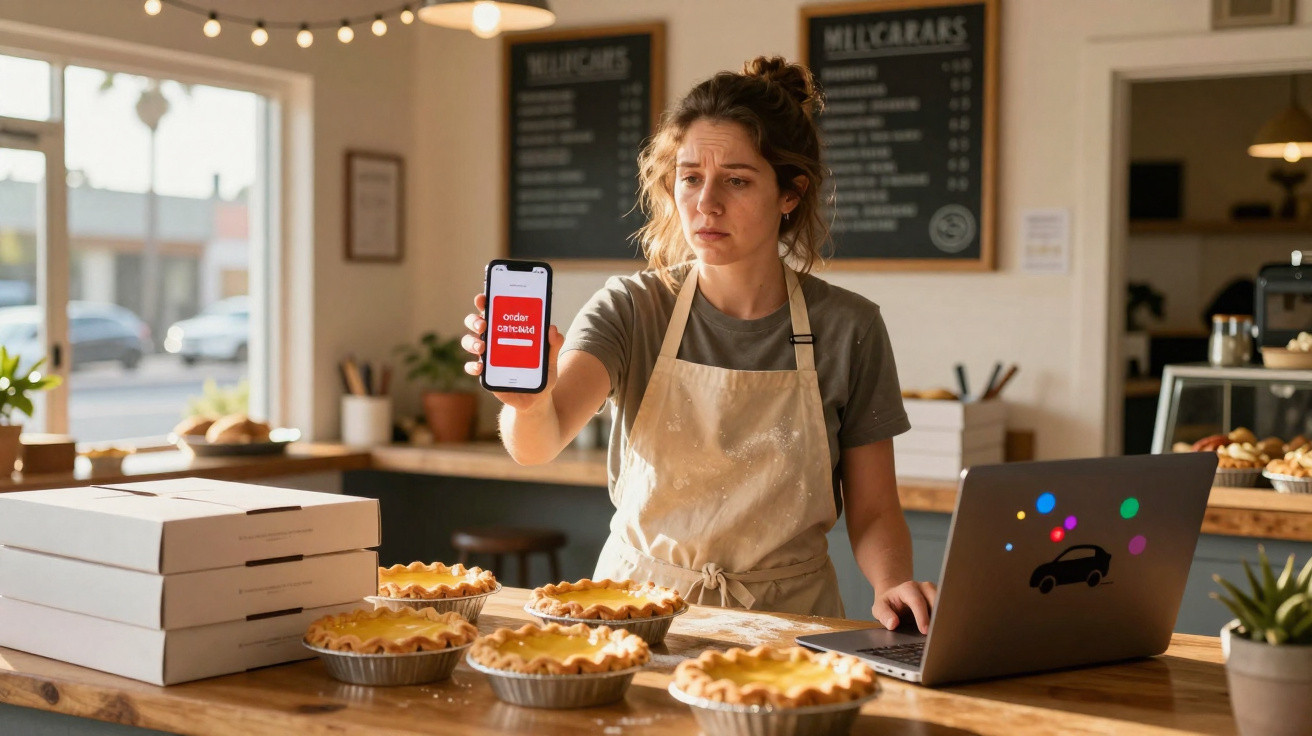
When a small California bakery was struggling to stay afloat, a major corporate order seemed to offer a way out.
The request came from Tesla and, on paper, it could have transformed the outlook for a pie shop in San Jose. Instead, the electric car maker later pulled the plug on the order, leaving the owner with costs, added staffing and no obvious route to the money she had been expecting.
A dream Tesla order for a bakery on the edge
The Giving Pies is a modest bakery in San Jose, California, owned and run by Voahangy Rasetarinera. In 2024, she says the business was unsteady. Higher operating costs, tight profit margins and the ongoing after-effects of the pandemic had left the shop close to the brink.
An email then arrived that appeared to change everything. Tesla staff wanted Valentine’s Day catering: 2,000 mini pies for an employee event, with the order valued at about $6,000. For a local bakery, that kind of work is enormous.
A single corporate order can represent several weeks of revenue for a local bakery – and often the difference between closing and carrying on.
Rasetarinera agreed without delay. She reviewed her oven capacity, began mapping out production and arranged additional shifts to deliver what would have been the largest order the bakery had handled. Bulk ingredients were purchased, packaging was sourced and the team was told to brace for a demanding-but potentially game-changing-week.
Payment delays and a surprise expansion
One concern surfaced early on: the payment was not arriving.
Even after invoices and follow-ups, the money from Tesla did not come through. Rasetarinera told US media that the bakery repeatedly asked when the funds would land. She later shared messages in which a Tesla contact-named only as “Laura”-responded with an apology.
In those messages, the Tesla employee said the company was using a third-party service, City Flavor, to process payment. She attributed the delay to the external provider’s lack of experience handling an order of this nature.
After that came an unexpected development. Rather than reducing the request, Tesla increased it. The bakery was informed that the original 2,000 mini pies had been doubled to 4,000, lifting the job’s value to roughly $16,000.
For a small shop, doubling an already massive order means doubling risk: more ingredients, more staff, and more time, all before a single dollar has arrived.
To deliver on the expanded request, The Giving Pies increased output. More staff were taken on, extra ingredients were purchased and the kitchen workflow was reshaped to operate almost continuously in order to meet the deadline.
A last-minute cancellation that hit hard
Then, a week before delivery, the plan fell apart.
Posts on the bakery’s Instagram said Tesla cancelled the full order via email with little warning. There was no detailed explanation, and no offer to cover ingredients already bought or labour already scheduled.
As Rasetarinera described it, the email was stark: Tesla said it no longer needed the pies and was “really sorry”. For a company of Tesla’s size, a $16,000 catering cancellation may barely register. For a small bakery, it can be devastating.
- Thousands of dollars had already been spent on ingredients.
- Staff had been hired and rostered because of the large order.
- Other potential customers had been declined due to limited capacity.
The impact-financial and emotional-was immediate. Although the bakery did not end up with a warehouse full of unsold pies because production was still under way, it had already committed to substantial upfront costs without any certainty of getting them back.
A factory tour as “compensation”
As criticism mounted, Tesla reportedly got back in touch with Rasetarinera. Rather than paying, the first offer was something much less tangible: a tour of a Tesla factory.
For the owner, this did not solve the core issue-rising costs and a significant hole where anticipated revenue had been. A factory visit may be interesting, but it does not cover wages or supplier bills.
Social media outrage pulls Elon Musk into the story
With few options, Rasetarinera chose to share what had happened publicly. She posted online about the cancellation and said the bakery had been close to collapse.
The story travelled fast. Supporters shared the post widely, and many comments condemned Tesla while rallying behind the bakery. Before long, the saga was being picked up by national publications including The Guardian, alongside technology-focused outlets.
In the age of platforms like Instagram and X, a single local business complaint can become a global PR problem within hours.
The attention ultimately reached Tesla’s CEO, Elon Musk. On X (formerly Twitter), Musk replied to users who were highlighting the bakery’s account and recounting the cancelled order.
He offered a short apology and said he would “make things right” and deal with the issue straight away. Rasetarinera later said Tesla sent $2,000, and that the publicity also drove a rush of new customers to the bakery.
A PR disaster that turned into unexpected marketing
After being on the verge of failure, The Giving Pies suddenly became a focal point. Locals came in specifically to spend money there, online orders increased, and media interviews generated even more interest-and sales.
Even so, the eventual Tesla payment was far below the $16,000 invoice tied to 4,000 pies. Still, the longer-term value of the new customer base could end up outweighing the lost order.
| Key element | Impact on the bakery |
|---|---|
| Initial 2,000-pie order | Promised $6,000 boost during a difficult period |
| Order expanded to 4,000 pies | Higher revenue potential but much higher costs and risk |
| Last-minute cancellation | Uncovered expenses, staff costs, and emotional stress |
| Viral social media story | Nationwide attention, spike in local support and sales |
| Elon Musk’s response | Partial compensation and reputational pressure on Tesla |
Why big corporate orders can be so risky for small businesses
The episode highlights a familiar challenge for small firms. Large corporate customers can deliver a month-changing boost, but they can also bring hazards that smaller operations are not designed to absorb.
When a multinational makes a major catering request, a local bakery may need to:
- Purchase ingredients in bulk with little notice.
- Bring in temporary workers or pay overtime.
- Restructure production schedules, putting regular customers to one side.
- Depend on promised payment that can be slowed by complicated internal processes.
When everything works, the supplier grows and gains a high-profile reference. When it does not-through cancellation or slow payment-the consequences can drag on for weeks or months.
How small shops can protect themselves
Situations such as The Giving Pies’ experience show why many small suppliers demand deposits or staged payments for large jobs. A handful of basic protections can reduce the fallout:
- Requesting a non-refundable deposit before production begins.
- Using written agreements that include cancellation charges.
- Agreeing firm payment dates and outlining penalties for late payment.
- Limiting dependency on any single customer by spreading risk.
These measures do not remove risk altogether, but they can make last-minute reversals far less damaging.
The power and double edge of online outrage
The story also demonstrates how quickly public pressure can shift the behaviour of large companies. Social platforms can amplify a single complaint-particularly where the imbalance between a small local business and a major brand is obvious.
For customers and owners, social media can act as an informal enforcement mechanism: a way to draw attention to behaviour that seems unfair, even where contracts are unclear or hard to enforce. However, viral backlashes can be chaotic. Details get flattened, companies may respond before fully checking facts, and reputations can swing on incomplete information.
Here, the exposure arguably created benefits for both sides in different ways. The bakery saw support and increased sales. Tesla, facing criticism, indicated it would address at least part of the situation, while also demonstrating that its CEO pays attention to grassroots complaints.
What this means for future small–big business relationships
For independent bakeries, caterers and makers, the Tesla pie episode will sound familiar. Big clients can offer both opportunity and stress in equal measure. A more even-handed arrangement-deposits, clear cancellation terms and realistic timelines-could reduce the chances of a dream order turning into a near-disaster.
At the same time, people attending corporate events may start to ask who supplied the food and how those suppliers were treated. A simple box of mini pies can carry a much larger story about power, responsibility and the realities of modern business relationships behind the scenes.


Comments
No comments yet. Be the first to comment!
Leave a Comment